
Updated September 12, 2026
Disclosure: As an Amazon Associate, I earn from qualifying purchases. This comes at no extra cost to you and helps keep this site running.
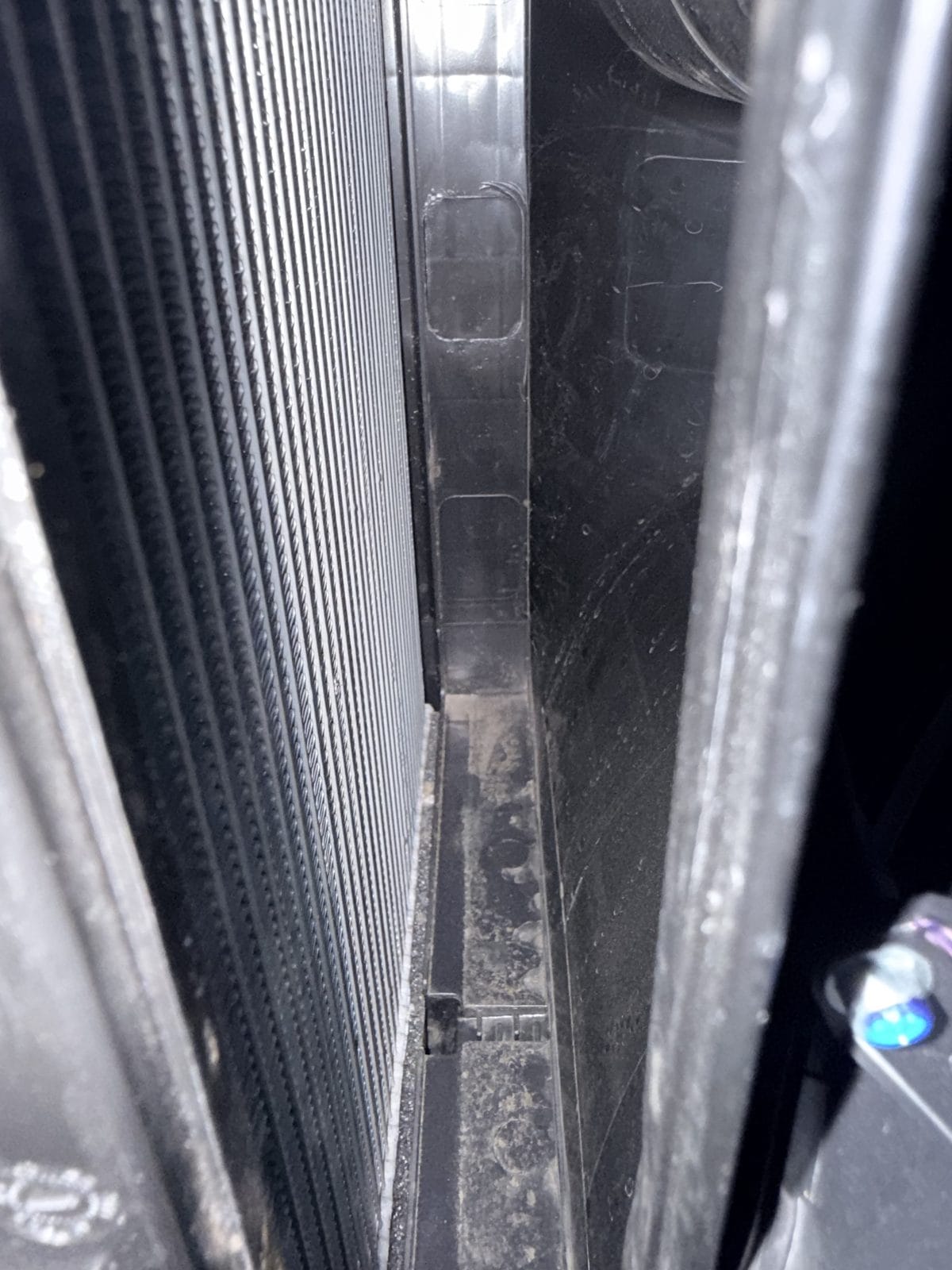
If you have been asking yourself why does my Tesla AC smell musty every time the fan comes on, the answer is almost always mildew on the AC evaporator, the cold coil that sits behind your cabin air filters. The smell is usually a damp, gym-locker funk, and sometimes closer to sour vinegar. I had it in my own 2023 Model Y, and after chasing it the wrong way for a while, a thin film of mildew on the evaporator turned out to be the whole problem. An air freshener won't fix it. This guide covers why it happens, how to be sure that is what you are dealing with, and what fixes it, and when you are ready to do the job there is a full photo walkthrough linked below.
Why Your Tesla AC Smells Bad (Moisture, Then Mildew)
Every time the AC runs, warm humid cabin air hits the cold evaporator coil and water condenses on it — the same way a cold glass sweats on a summer day. In most driving that water drains away, but the evaporator sits in a dark, enclosed housing that never fully dries out between trips. Give a damp, dark box a few warm months and you get mildew. That biofilm is what you smell: the blower pushes air straight across the colonized coil and into your face, which is why the odor is worst in the first few seconds and fades a little once air is moving.
It matters more than a bad smell. What you're breathing is the byproduct of active mold growth, recirculated through the cabin on every drive. For most people it's just unpleasant; if anyone who rides with you has asthma, allergies, or mold sensitivity, it's worth fixing properly instead of masking.
How to Tell It's the Evaporator (and Not Something Else)
Before you buy anything, confirm the smell actually points to the evaporator. A few quick tells:
- It's musty, moldy, or sour (“vinegar”) — and worst at startup. Classic evaporator mildew. Strong for the first few seconds, then settles as air moves.
- It's there on both recirculate and fresh air, from every vent. That points inside the HVAC box (the coil), not something outside the car.
- Stronger after the car has sat overnight in humid weather. Moisture had all night to feed the film.
Smells that are not this — and shouldn't get the foam treatment: a sweet, maple-syrup smell can be a coolant leak; a hot electrical or fishy smell is a wiring issue; and a smell that only shows up outside the car isn't your cabin system. Those need a look from a tech, not a can of cleaner. If yours is the musty, gym-locker, mildew kind, keep going.
Quick Things to Try First
Two of these cost nothing and might buy you time:
- Dry the coil on your next few drives. For the last few minutes before you park, turn the AC compressor off but leave the fan running on fresh air, not recirculate. That dries the evaporator before the car sits, so mildew has less to feed on. It won't remove an established smell, but it slows a new one and helps after you clean.
- Replace the cabin air filters. If yours are a couple of years old they're part of the problem — a loaded, damp filter holds odor too. Tesla's maintenance schedule calls for cabin-filter replacement about every two years, sooner if you park outside or in heavy pollen. Fresh filters alone won't kill an evaporator smell, but you have to pull them to reach the coil anyway, so do both at once.
If the funk is already established, neither of these finishes the job on its own. For that you have to clean the coil.
The Real Fix: Clean the Evaporator
The smell lives on the coil, so the fix has to reach the coil. A foaming evaporator cleaner does exactly that: with the cabin filters out, you spray the foam across the exposed evaporator, it expands into the fins and breaks down the mildew film, then drains out through the AC's condensate line — no rinsing, no mess in the cabin. It's about a 30-minute job (15 of it just waiting for the foam to work), and it's the same approach a service center uses for a fraction of the price.
You don't need to be handy, and you don't need to leave this page to see what's involved. Here's the entire job, start to finish:
- Slide the passenger seat all the way back and settle in on the passenger floor — everything happens in the footwell under the glove box.
- Pop off the narrow trim strip on the passenger side of the center console with a plastic trim tool. It's held by clips only — no screws.
- Remove the carpeted cover under the glove box — four push pins, levered out with the same trim tool — and lower the panel away.
- Take out the single screw holding the filter-access cover on the HVAC housing and set the cover aside.
- Pull both cabin filters out by their tabs, upper one first. The evaporator coil is now exposed right behind where they sat.
- Foam the coil: spray the evaporator cleaner across the fins top to bottom and let it soak about 15 minutes. It liquefies and drains out through the AC's condensate line on its own — no rinsing, no mess in the cabin.
- Install the new filters (airflow arrows pointing down, pull tabs facing out and folded up), then reassemble in reverse: cover screw, push-pin panel, trim strip.
- Dry it out: run the AC on fresh air — not recirculate — with the fan on high for a few minutes.
That's the whole fix — no jack, no service visit. If you want to see exactly what each of those steps looks like before you start, I photographed every one of them on my own Model Y:
Tesla Cabin Filter + Evaporator Clean: the Complete DIY, With Photos
The same eight steps above, photographed one at a time — every clip, screw, and spray of foam, shot on my own Model Y.
Read the full how-to →The fix itself comes down to one product:
Leak Saver Foam Blaster AC Coil Cleaner
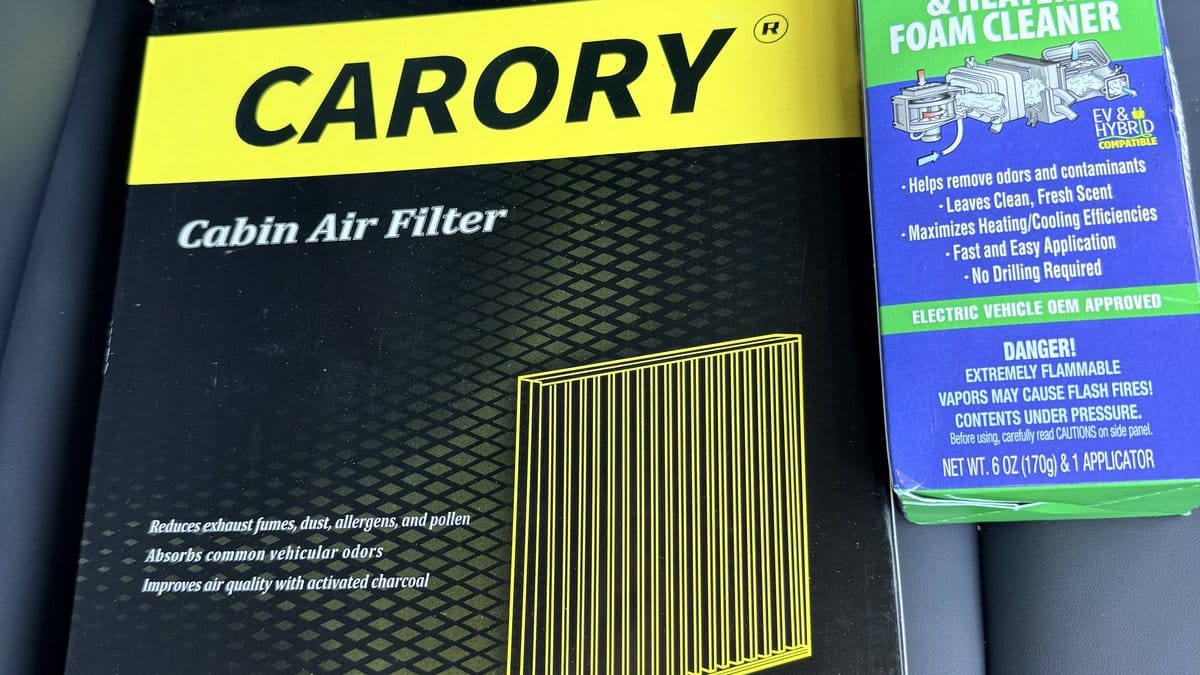
A foaming evaporator cleaner is made for exactly this: it clings to the coil, expands into the fins, and dissolves the mildew film that causes the smell — then drains out the condensate line, no rinse. This is the type of no-rinse foam that killed the musty smell in my Model Y — the exact can I used (Lubegard Kool-It) is often out of inventory, and this HVAC-grade equivalent from a company owned by HVAC technicians does the same job on the same coil. Just know it ships without a flexible applicator tube, so it can be slightly awkward to aim through the cabin filter opening. This is the part that actually ends the smell; filters and sprays don't.
Specs: Foaming aerosol | 18 oz can | No-rinse on evaporators
Check Price on Amazon →While you're in there, you need fresh filters too — you have to remove them to reach the coil, and reinstalling old ones just re-seeds the odor.
CARORY Cabin Air Filter 2-Pack with Activated Carbon (Model 3 / Y)
This is the filter set I used, and my box shipped with the plastic trim tool and the wrench you need to open the filter housing cover. Note: Amazon's listing currently lists only the filters as included — have a trim tool and small wrench handy in case yours ships without them. Activated-carbon layer for odors.
Specs: Fits Model 3 (2017–2026) & Model Y (2020–2026) | Activated-carbon odor layer | Matches Tesla OE# 1107681-00-A
Check Price on Amazon →Once the coil is clean and new filters are in, build the fresh-air dry-out habit from above and the smell tends to stay gone for a year or more. Model 3 owners: the layout is nearly identical — same fix, same products. See the full step-by-step guide for the teardown, and our Model Y accessories guide and Model 3 accessories guide for the other upkeep worth doing while you're at it.
Frequently Asked Questions
Why does my Tesla's AC smell like a gym locker or vinegar?
Both smells come from the same place: mildew growing on the damp evaporator coil behind your cabin filters. “Gym locker” and sour “vinegar” are just how different people describe the same microbial film. The blower pushes air across it and into the cabin, so it's strongest in the first few seconds after the fan starts.
Will new cabin filters get rid of the musty smell?
Not on their own. Fresh filters help air quality and remove a filter that's holding odor, but the mildew lives on the evaporator, not the filter. If you only swap filters, the smell comes back through the new ones. Clean the coil and replace the filters together.
Do vent sprays or an ozone treatment fix it?
They mask it, usually for days to a couple of weeks. Aerosol “odor bombs” and cabin sprays don't reach or kill the film on the coil, so the mildew smell returns. A foaming evaporator cleaner applied directly to the coil is what actually removes the source.
How do I keep the musty smell from coming back?
For the last few minutes before you park, run the fan on fresh air with the AC compressor off to dry the evaporator. (If you leave Cabin Overheat Protection running while parked, our guide covers which setting runs the fan alone and what each one costs in range.) Replace the cabin filters on schedule (about every 1–2 years, sooner if you park outside or in heavy pollen), and re-clean the coil whenever the smell starts creeping back.
The smell came back within weeks even after cleaning — what now?
If a thorough coil cleaning doesn't hold, you may have standing water from a clogged evaporator or condensate drain keeping the housing wet. That's worth a service visit, because no amount of cleaner fixes a drain that won't drain.
Our Honest Verdict
A musty Tesla AC almost always comes down to mildew on the evaporator, and it is a cheap fix you can do yourself. Air fresheners and vent sprays only cover the smell while the mildew keeps growing, so skip them. Spend about $19 on a foaming evaporator cleaner, put in fresh filters while you are in there, and give it 30 minutes. That takes care of the source. After that, get in the habit of letting the system dry out with fresh air and the smell stays gone. The only time to hand it to a service center is if the smell comes back quickly after a proper cleaning, because that usually means a blocked drain, and a spray will not fix that.