Updated October 13, 2026
Disclosure: As an Amazon Associate, I earn from qualifying purchases. This comes at no extra cost to you and helps keep this site running.
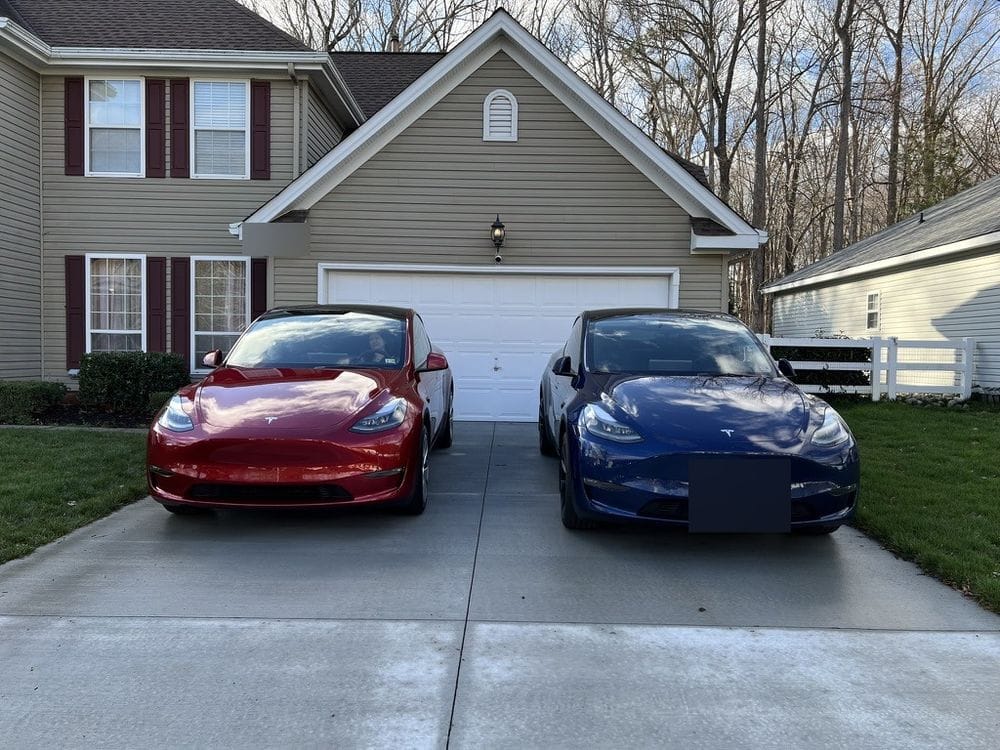
The Model Y is the Tesla I know best, because there are two of them in my driveway, a blue 2023 and a red 2024, both bought new. Even buying new, the Y's constant mid-year changes affected my decision. I was in the market right as Hardware 4 was announced, and I waited for it rather than take a car with the outgoing computer. That kind of timing matters even more when you are shopping for the best used Tesla Model Y year, and I will show you why below.
I learned the used-shopping method itself while researching a used Model 3 for my daughter's first car, and that story and the full year-by-year breakdown are in my best used Tesla Model 3 year guide. The Model Y needs the same treatment, and probably more, because it changed constantly, mid-year, with no announcements, and for a while two different factories were building it with different batteries at the same time. Two cars with the same model year on the title can be very different machines. Below is everything that changed, when it changed on the production line, and how to verify it on the car in front of you.
Build Date Beats Model Year — Even More Than on the Model 3
Tesla ships changes whenever they’re ready, and the Model Y adds a wrinkle the Model 3 doesn’t have: two factories building different cars at the same time. From April 2022, Austin built Model Ys alongside Fremont — including a version with a structurally different battery pack.
Two five-second checks: the door jamb sticker (driver’s B-pillar) shows the exact build month and year, and in the VIN, the 10th character is the model year (L=2020, M=2021, N=2022, P=2023, R=2024, S=2025, T=2026) while the 11th is the factory — F = Fremont, A = Austin.
Best Used Tesla Model Y Year: The Year-by-Year Rundown
| Model year | What changed | Used-buyer takeaway |
|---|---|---|
| 2020 | Launch (March 2020): LR AWD + Performance, heat pump standard from day one | Cheapest entry, but the roughest build-quality year |
| 2021 | Heated wheel + metal scroll wheels (~Jan), new console (~Feb), radar deleted (spring); short-lived SR RWD; 7-seat option | The car matured fast — late builds are much better buys than early 2020s |
| 2022 | AMD Ryzen (builds from ~Dec 2021); Austin opens Apr 2022 (4680 Standard Range AWD); matrix headlights on LR (Aug); ultrasonic sensors deleted Oct | Great values — but peak “check the build date and factory” territory |
| 2023 | January price cuts reset used values; HW4 phases in from ~June 2023 builds; 4680 SR AWD dropped (Sept); RWD returns (Oct) | HW3 and HW4 sold side by side all year — verify, don’t assume |
| 2024 | EPA re-rating (330→310 mi on paper — methodology, not hardware); LR RWD (320 mi) arrives | Last legacy year; the range “drop” vs 2023 is a paperwork change |
| 2025 | Juniper redesign (US deliveries Mar 2025): light bars, quieter cabin, better suspension, rear screen — and it kept the turn-signal stalk; budget “Standard” trim (Oct) | The comfort jump; still commands near-new money used |
| 2026 | Premium trim structure, 357-mi RWD, 7-seat option returns, some 4680 packs return | Mostly a new-car story for now |
2020–2021: Cheap, Capable, and Worth Inspecting Closely
The Model Y launched in March 2020 with the heat pump standard from day one — unlike the Model 3, every Model Y has a heat pump, so that’s one variable off your list entirely.
What early cars don’t have is Tesla’s best build quality. 2020 — especially the first months — was the rough era: panel gaps, paint flaws, misaligned trim. Tesla improved steadily through 2021, and the car itself picked up refinements along the way: acoustic double-pane front glass (late 2020 builds), heated steering wheel and metal scroll wheels (~January 2021), and the sliding-console interior (~February 2021). Radar was deleted in spring 2021; all of these cars run camera-only software today regardless.
At mid-2026 prices — roughly $20,000–$25,000 for a 2020–21 Long Range (approximate) — these are the cheapest ways into a heat-pump Tesla crossover. Budget mentally for the known wear item: front upper control arm ball joints, the classic squeak on 2020–2023 Ys, typically showing up between 25k–60k miles. It’s an annoyance, not a catastrophe — and a negotiating point.
Two recall-history checks on this group: the November 2020 control-arm/knuckle bolt recall (small batch of fall-2020 builds) and the February 2022 heat-pump valve recall (a software fix — any car that’s been updated since is fine, but on a 2020–21 car that lived in a cold climate, ask whether the refrigerant sensors were ever replaced under Tesla’s service bulletin).
Late 2021–2023: The Value Sweet Spot
Builds from ~December 2021 get the AMD Ryzen infotainment computer (snappier, and required for some newer features) plus a lithium-ion 12V battery that ended the old lead-acid failure cycle. Through 2022 the car kept improving — matrix LED headlights came to the Long Range around August 2022 — while used prices on this era have been reset twice: once by Tesla’s January 2023 new-car price cuts, and again by ordinary depreciation.
The result, as of mid-2026: a late-2021/2022 Long Range in the mid-$20s, and 2023s from the high-$20s (approximate). For most families, this is the best used Tesla Model Y year window — modern interior, Ryzen screen, matured quality, meaningful battery warranty remaining.
Three build-date gotchas inside this window:
- October 2022+: ultrasonic sensors deleted. Park assist on these cars is camera-based; it was rough at first, restored by software in 2023, and fine today — but try it on your test drive.
- Ordered after April 17, 2022: no mobile charging cable included. Check the trunk.
- Ordered after July 20, 2022: Standard Connectivity is 8 years from delivery instead of lifetime. Minor, but it’s a tiebreaker between two otherwise identical cars.
The Austin 4680 Exception: Know Your Battery Pack
From April 2022 to September 2023, Giga Texas built a Standard Range AWD with Tesla’s 4680 cells in a structural pack — 279 miles of rated range, and a real-world quirk: it Supercharges noticeably slower past 50%, which matters on road trips. The pack is also bonded into the car’s structure, so repair options are more limited than the conventional 2170 packs (more on worst-case economics in my battery replacement cost guide).
None of this makes it a bad car for local driving, and they’re often priced attractively. It makes it a car you should buy knowingly. The tell: an “A” in VIN position 11 on a 2022–23 Standard Range/AWD. (Austin also built regular 2170-pack cars, so the trim + factory combination is what to look for.)
One more oddity from this era: the 2023–24 “RWD” (260 miles) was a software-locked Long Range pack — fine, just quirky trivia that occasionally turns into free range if Tesla offers unlocks.
HW3 vs HW4: The 2023 Split That Matters in 2026
From roughly June 2023 builds, Model Ys started shipping with the HW4 Autopilot computer — but HW3 and HW4 cars were delivered side by side for months. This split isn’t academic to me: I was shopping for a Model Y just as HW4 was announced, and I waited until I could get one rather than take an HW3 build. Why care? Because Tesla has now confirmed HW3 won’t do unsupervised FSD; owners who bought FSD get an upgrade/trade-in path, but a used buyer today should follow one simple rule: don’t pay extra for FSD on an HW3 car. I’ve lived that gap — FSD on my HW4 Model Y vs. our HW3 Model 3 — and my 50,000-mile FSD verdict spells out the difference.
If future self-driving capability is part of why you’re buying, target mid-2023 or later builds and verify HW4 on the car. The quick visual: HW4 front cameras (top of windshield) show red-tinted lenses.
2025–2026: Juniper
The Juniper redesign reached US customers in March 2025: full-width light bars front and rear, an 8-inch rear touchscreen, ventilated front seats, power-folding rear seats, much better sound insulation, and a genuinely more compliant suspension. Unlike the Model 3 Highland, Juniper kept a turn-signal stalk — Tesla learned its lesson.
Used Juniper inventory exists (rentals, quick flips) but still trades near new-car money — high-$30s and up, approximate. The budget “Standard” trim launched October 2025 at $39,990 new; note it’s decontented (passive dampers, fewer speakers, covered glass roof, no Autosteer) — a used Standard is not the same car as a used Long Range/Premium, so compare trims, not just years.
Which Used Model Y Should You Buy?
Tightest budget (~$20–24k): a 2021 Long Range — ideally a mid-2021-or-later Fremont build. You skip the worst of the 2020 quality era and get the updated interior. Every dollar saved here accepts the Intel screen and HW3.
Most people (~$24–30k): a December-2021-or-later build through 2023 Long Range. Ryzen screen, matured build quality, warranty runway. My pick for a family hauler on value alone.
Software-forward buyers (~$28–34k): a mid-2023+ HW4 car. You’re buying insurance on Tesla’s software future for a modest premium.
Comfort-first (~$38k+): a 2025 Juniper. It fixes the Model Y’s two oldest complaints — ride and road noise — in one generation.
Buy knowingly, not blindly: the 2022–23 Austin 4680 Standard Range AWD (road-trip charging curve), the earliest 2020 builds (quality roulette), and any HW3 car with “FSD included” priced like that’s worth full freight.
How to Verify What a Specific Car Actually Has
- Door jamb sticker: build month/year — resolves nearly every cutover above.
- VIN position 11: F = Fremont, A = Austin. On a 2022–23 Austin Standard Range/AWD, assume 4680 and ask charging questions.
- Controls → Software → Additional Vehicle Information: Intel Atom vs AMD Ryzen, and the Autopilot computer generation.
- Windshield cameras: red-tinted lenses = HW4.
- Bumpers: twelve small round dots = ultrasonic sensors (pre-Oct-2022 build).
- Front windows: roll one halfway down — a laminated “sandwich” line on the glass edge = acoustic glass (late 2020+).
- Console and scroll wheels: sliding matte console + metal wheels = ~Feb 2021 or later.
- Headlights: a pixel-grid LED array behind the lens = matrix headlights (most late-2022+ Long Range builds); the adaptive function came alive via software in 2025.
- Trunk: confirm the mobile connector is present (often missing on post-April-2022 orders).
- VIN at nhtsa.gov/recalls: check the second-row seat-frame bolt recall (2022–23 builds — both Fremont and Austin were affected) and that heat-pump-era items are closed out.
- Battery health: ask for a 100% charge screenshot vs original EPA rating — ~88–90%+ is healthy at 3–5 years. Warranty: 8 years/120k miles on Long Range/Performance (100k on SR/RWD), 70% retention floor, from original delivery.
- Test drive: listen for the front-end creak (upper control arms) over driveway transitions.
If the car comes from Tesla used inventory, you still get a delivery appointment like a new buyer. My Tesla delivery day checklist walks through that hour in order, and most of it applies to a private sale too.
The Used-Model Y Starter Kit
Day-one purchases I’d make on any used Model Y — several of which cover exactly what older years lack. (The full list lives in my best Model Y accessories guide, and for a one-page view of every current pick — including Juniper-specific fits — see the Model Y accessory directory.)
bokman Portable Level 1/Level 2 EV Charger (NEMA 14-50, 25 ft)
Cars ordered after April 2022 didn’t include a charging cable, and used listings lose them regardless. Level 1 and Level 2 in one cable with a 25-foot reach — the gap-filler until you install one of the Level 2 home chargers.
Check Price on Amazon →GOOLOO A5 Jump Starter + Tire Inflator
Old-style 12V batteries die without much warning and take the whole car down with them. Cheap insurance that also airs up tires.
Check Price on Amazon →SUPER LINER All-Weather Floor Mats, Model Y 2021–2024 (9-Piece)
Used-car floors have history. Full coverage including the under-trunk wells resets the interior on day one.
Check Price on Amazon →PNY PRO Elite High Endurance 256GB + PNY Performance Prime USB-A Reader
Sentry Mode and dashcam recording need endurance-rated storage — and a microSD can’t plug into the car on its own, so the PNY USB-A reader is the required partner.
Card on Amazon → Reader on Amazon →Frequently Asked Questions
Does every used Model Y have a heat pump?
Yes. Unlike the Model 3 (which got one in 2021), the Model Y launched with a heat pump in March 2020. Cold-climate buyers don’t need to filter by year for this.
What year did the Model Y get the AMD Ryzen chip?
Builds from about December 2021 — so most 2022 model year cars, but not the earliest ones. Check Controls → Software → Additional Vehicle Information on the car; it names the chip.
Which used Model Y has the 4680 battery, and should I avoid it?
The Standard Range AWD built in Austin from April 2022 to September 2023 (VIN position 11 = “A”). Don’t avoid it — just price it right. It fast-charges slower on road trips and its structural pack has fewer repair options, so it should cost meaningfully less than a comparable Long Range.
How do I know if a used Model Y has HW3 or HW4?
Build date is the first clue — HW4 phased in from roughly June 2023 — but 2023 was a mixed year, so verify on the car: the software screen lists the Autopilot computer, and HW4 front cameras have red-tinted lenses. Don’t pay a premium for FSD on an HW3 car.
Is the 2025 Juniper worth the extra money used?
If ride comfort and cabin noise are your top complaints with Teslas, yes — it’s the biggest single-generation comfort improvement the Y has had, and it kept the turn-signal stalk. If value per dollar is the goal, a 2022–2023 Long Range does 90% of the job for thousands less.
Our Honest Verdict
For most people, a late-2021 through 2023 Long Range is the best used Tesla Model Y. It has the Ryzen screen, the build quality had settled down by then, the heat pump was standard from the start, and after the price cuts a used one is thousands cheaper than a newer car with nearly the same equipment. Go mid-2023 or later for HW4 if you care about where the software is headed. Go Juniper if comfort is what you want and the budget reaches that far.
Whichever year you land on, check the individual car, and this guide gives you the five-minute checklist for that. The Y I would put my own family in is one where the build sticker, the software screen, and the charge history all match what the seller is telling you.