Updated September 1, 2026
Disclosure: As an Amazon Associate, I earn from qualifying purchases. This comes at no extra cost to you and helps keep this site running.
We bought our daughter a used Tesla Model 3 as her first car, and I want to explain why, because it was not the obvious choice. I looked at the usual options first, Honda Civics, Toyota Corollas, maybe a used SUV. The more I dug into the numbers on the Model 3, though, the more sense it made for a first car.
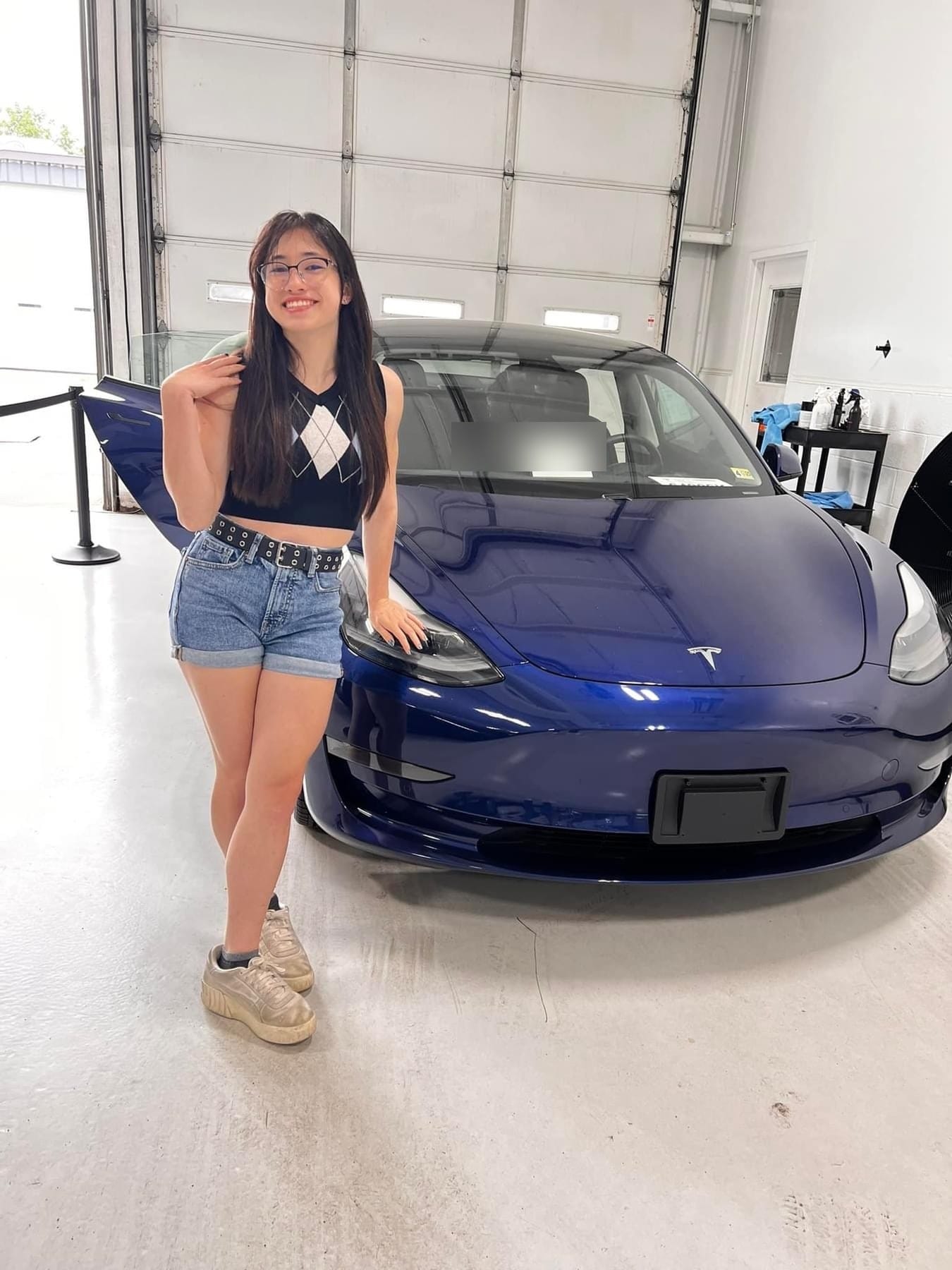
Hers is a deep blue Model 3, and a year later I still think we made the right call. Below is my parent’s breakdown of what a used Model 3 does for a teen driver, so you can decide whether it makes sense for your family.
Safety First: The Numbers Are Hard to Argue With
Every parent’s #1 concern with a teen driver is safety. The Tesla Model 3 happens to be one of the safest production cars ever tested.
What makes the Model 3 so safe isn’t just its crumple zones — it’s physics. The battery pack sits in the floor, giving the car an extremely low center of gravity. That means it’s far less likely to roll over than a typical SUV, which is often the first car parents consider. The front trunk (frunk) also acts as a massive crumple zone because there’s no engine block to intrude into the cabin.
Tesla’s Parental Controls Are Actually Useful
This is where Tesla genuinely stands apart from every other “first car” option. Through the Tesla app on your phone, you get real controls — not just theoretical ones.
- 🔒Pin to DriveA 4-digit PIN must be entered on the touchscreen before the car will move. Without it, the car cannot be shifted into Drive — no matter who has the key card or phone key.
- 👨👩👧Parental Controls (dedicated feature, added 2024)Tesla’s built-in parental feature — accessible in the Tesla app under Security & Drivers — lets you enforce Chill mode acceleration, set a speed limit, require safety features to remain on, and get a night curfew alert if the car is driven after a set time. Protected by a 4-digit PIN your teen cannot bypass from the car.
- 🚦Speed Limit ModeA separate feature that hard-caps maximum speed between 50 and 120 mph. Requires a PIN to change or disable — your teen cannot override it from inside the car.
- 🅿️Valet ModeLimits top speed to 70 mph, reduces acceleration by ~50%, disables Autopilot, locks the glove box and frunk, and hides personal info (home address, contacts, recent destinations) from the screen. Useful any time someone else needs to move the car.
- 📍Live Location in Tesla AppSee exactly where the car is in real time from your phone — free and built in, no subscription required.
- 👁️Driver Profile MonitoringThe Tesla app shows which driver profile is currently active in the car. For full trip history and detailed drive logs, third-party apps like Teslascope connect via the Tesla API — most are free or low-cost.
What Does a Used Tesla Model 3 Actually Cost?
Tesla prices have dropped significantly as the used market has matured. Here’s a realistic 2026 breakdown:
| Year / Trim | Est. Used Price | Range | Notes |
|---|---|---|---|
| 2019–2020 Standard Range Plus | $18,000–$22,000 | ~250 mi | Best value entry point |
| 2020–2021 Long Range AWD | $24,000–$28,000 | ~350 mi | Dual motor, great for all weather |
| 2022–2023 Standard Range RWD | $26,000–$31,000 | ~272 mi | Newer tech, better warranty remaining |
| 2023–2024 Highland Refresh | $32,000–$38,000 | ~341 mi | Updated interior, newer FSD hardware |
A 2019–2020 Standard Range Plus is the sweet spot for most families — enough range for daily driving, priced like a comparable Honda Accord, and still fully capable of all Tesla’s parental control features. Look for certified pre-owned listings on Tesla’s own website for the best-condition inventory. For the full year-by-year breakdown of what changed and when (heat pump, chrome delete, the AMD screen), see my best used Tesla Model 3 year guide. Shopping the bigger car instead? The same year-by-year approach for the crossover is in my best used Tesla Model Y year guide.
The Maintenance Advantage Nobody Talks About Enough
One long-term cost worth understanding before you buy used is the battery pack. The good news: it rarely needs replacing, and the 8-year warranty covers the years a defect is most likely. Still, it helps to know what a Tesla battery replacement actually costs so a scary headline number never talks you out of a great, cheap-to-run car. (And if you're wondering how long do Tesla batteries last in the real world, I've published my own cars' measured degradation numbers — including an official battery health test.)
Here’s the part that surprised me most as a first-time EV owner: the ongoing cost difference is substantial.
A teen who forgets oil changes (every teen, at some point) won’t damage the car. Regenerative braking means brake pads last two to three times longer than in a gas car. The biggest routine maintenance items are tire rotations and cabin air filter replacements — neither of which is urgent if delayed.
Charging at Home: Easier Than You Think
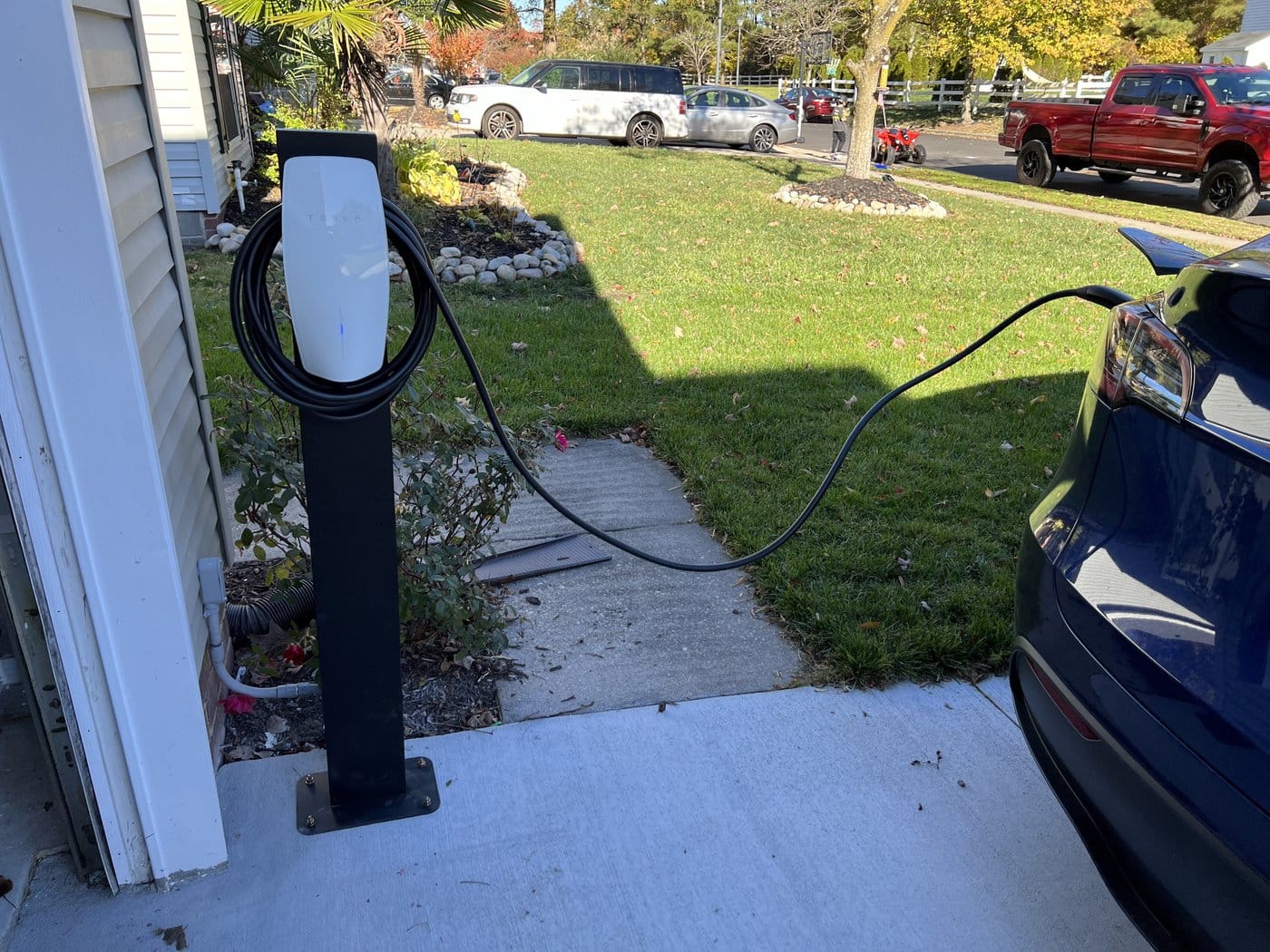
The biggest objection most parents have is charging anxiety. In practice, a teen’s daily driving rarely exceeds 40–60 miles. A standard 120V outlet (Level 1) adds about 4 miles per hour of charge — enough if they plug in overnight. For faster charging, a Level 2 home wall connector
Check out our guide to the best Level 2 EV home chargers for detailed reviews. A wall connector adds 25–30 miles per hour and costs around $400–$600 installed.
The practical result: your teen never goes to a gas station. They plug in at home, wake up with a full charge, and never have the “I forgot to get gas” conversation.
What Teens Actually Love About It
Beyond the parent-logic reasons, a Model 3 has genuine teen appeal — which matters for getting buy-in.
Controls everything — music, navigation, climate, even games when parked. Teens who grew up on smartphones find the interface intuitive in minutes.
Even the Standard Range is quick off the line. Tesla’s Parental Controls enforce Chill mode automatically for new drivers, and Valet Mode independently reduces acceleration by ~50%. Either way, you control how quick the car feels.
The premium audio in most Model 3s is genuinely excellent. First-car music experience matters more than parents usually admit.
No phone-mount fumbling or data drain. Navigation is built into the screen with live traffic and Supercharger routing.
Every Tesla Model 3 comes with 8 cameras covering every angle of the car. Sentry Mode watches for suspicious activity while parked and saves clips automatically. TeslaCam records everything while driving. No dash cam needed — and for a new driver, having video evidence of any incident is priceless. Just make sure Sentry and TeslaCam are saving to a drive that can survive the constant writes — here are the best USB drives for Tesla Sentry Mode. If a drive keeps dropping out mid-drive, here’s what to do when a Tesla USB drive keeps failing.
Let’s be honest — showing up to school in a Tesla turns heads. The sleek frameless design, the giant touchscreen, the way it silently pulls away from a stop light — it’s genuinely cool. For a teen, that matters. And unlike a loud exhaust or oversized rims, this kind of cool comes standard.
Must-Have Accessories for a Teen’s Model 3
Once you have the car, check out our full guide to best Tesla accessories — many Model Y picks apply directly to the Model 3. These are the top accessories worth getting right away — most are under $50 and make a real difference.
WeatherTech Floor Mats (Model 3 Specific)
Custom-fit laser-measured floor liners that trap mud, spills, and everything else a teen brings into a car. The #1 accessory any Tesla owner should have from day one.
Check Price on Amazon →Tempered Glass Screen Protector (15.4″)
The center touchscreen is the most-touched surface in the car. A tempered glass protector prevents scratches and glare, and keeps the display looking new for years. Match it to your car's screen: pre-2024 Model 3s use a 15" display, the 2024+ Highland a 15.4" one.
Check Price on Amazon →Center Console Organizer
The Model 3’s center console storage is good but deep. A tray organizer keeps keys, chargers, and everyday items accessible without disappearing into the abyss.
Check Price on Amazon →Key Card Holder / Wallet Case
The Model 3 uses a key card (or phone key) instead of a traditional key. A slim cardholder or lanyard keeps it protected and easy to find — teens lose things, it’s a fact of life.
Check Price on Amazon →Also see our full Tesla accessory guides: Best Tesla Model Y Accessories 2026 and Best Tesla Cybertruck Accessories 2026.
Is It the Right Call for Your Family?
Our Honest Verdict
If you can afford the upfront cost of a used Model 3, or finance one, it pays you back in lower fuel costs, very little maintenance, and parental controls you won’t get on a gas car. The safety ratings are the reason it made our shortlist in the first place. A year in, it’s the best car purchase we’ve made.
A used Tesla Model 3 makes most sense if: your teen drives a predictable daily route (under 150 miles), you can install a Level 2 charger at home, and you want real parental controls rather than the honor system. It’s not for everyone — but for families where those boxes are checked, it’s genuinely hard to beat.
Related Guides
Shopping beyond Tesla, or curious what else the used market offers? My complete best used EVs of 2026 guide ranks every mainstream option — from $13K commuters to half-price luxury — bracket by bracket.