Updated September 5, 2026
Disclosure: As an Amazon Associate, I earn from qualifying purchases. This comes at no extra cost to you and helps keep this site running.
The reason the Audi e-tron new vs used question needs its own guide is that the name covers four very different cars: a compact crossover, a new 800-volt midsize SUV, a discontinued flagship, and a 912-horsepower sedan. That confuses shoppers, and the confusion creates bargains. I covered the used market in general in my best used EVs of 2026 guide. No other brand has a wider gap between the smart way to buy new and the smart way to buy used inside one model family, so the e-tron lineup gets a closer look here.
Below is a review of each e-tron, covering what it is like to live with, what it costs new versus one to three years used as of June 2026, and which way to buy. The prices are typical asking ranges from the major listing sites (Edmunds, KBB, CarGurus), and your local market will vary.
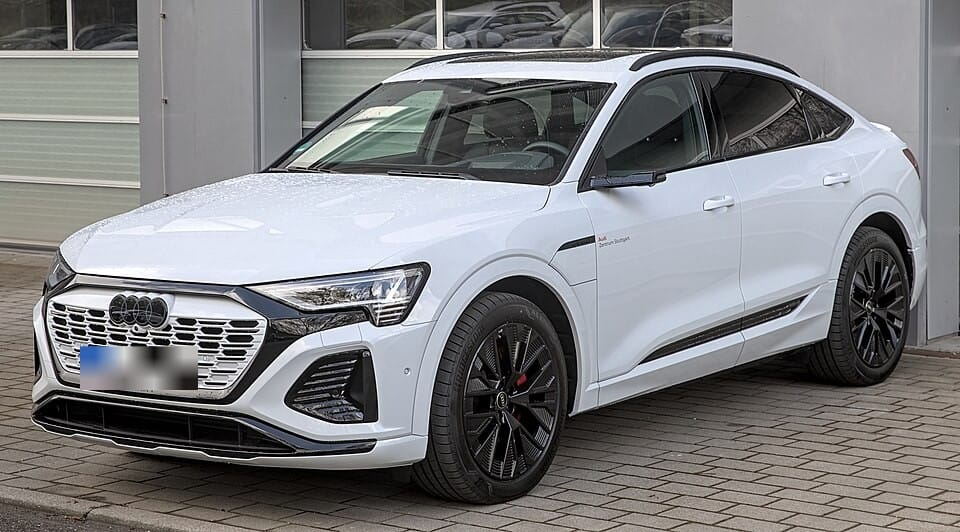
Four e-trons, four different answers to the new-vs-used question.
The Audi e-tron Family at a Glance
| Model | New (2026) | Used (1–3 yrs old) | Verdict |
|---|---|---|---|
| Q4 e-tron (compact SUV) | $50,600–$60,500 | $28,000–$36,000 | Buy used |
| Q6 e-tron (midsize SUV) | ~$66,000–$83,000 (SQ6) | Thin market, modest discounts | Buy new |
| Q8 e-tron / e-tron (large SUV) | Discontinued | $30,000–$48,000 | Used only — bargain |
| e-tron GT (sport sedan) | $128,995 (S) / $171,795 (RS) | $40,000–$60,000 (2022–23) | Buy used, decisively |
Audi Q4 e-tron: The Entry Point — Buy It Used
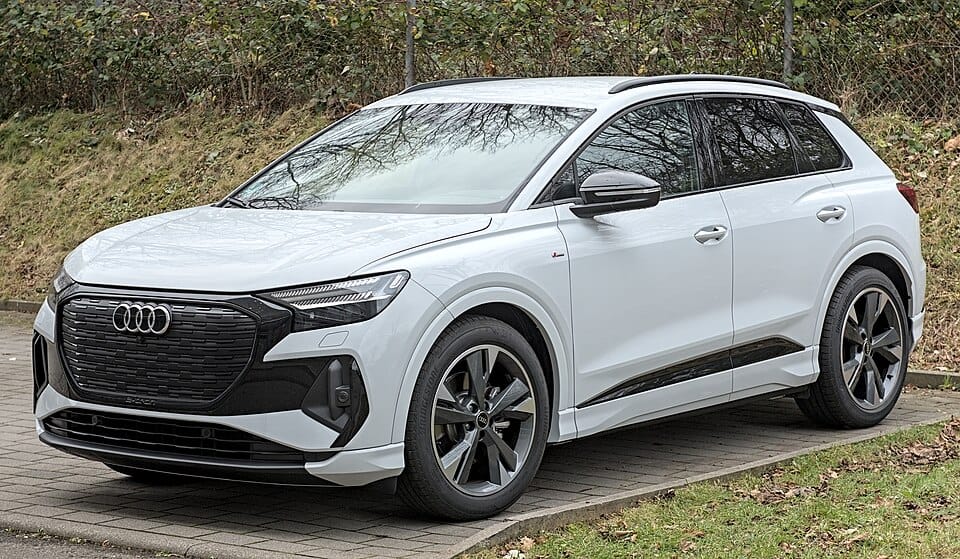
The review. The Q4 is the entry point to the Audi e-tron range, and it’s best understood as a premium cabin wrapped around sensible mechanicals. The 2026 car comes two ways: the rear-drive 45 with 282 hp and 288 miles of EPA range, and the dual-motor 55 quattro with 335 hp, 258 miles, and a 5.0-second 0–60. Both use an 82 kWh battery that DC fast-charges at up to 175 kW — about 28 minutes from 10–80%, mid-pack for the class.
What you’re really buying is the interior: real materials, Audi’s excellent driving position, and a ride that’s quieter and more settled than almost anything at the price. What you’re giving up is excitement — the Q4 is competent and comfortable rather than quick-witted, and its infotainment, while improved in recent years, still trails Tesla’s for fluidity.
New vs used. This one isn’t close. A new Q4 e-tron 45 Premium starts at $50,600 and climbs past $60,000 for a loaded 55. The used market, meanwhile, is flooded with 2023–24 cars at $28,000–$36,000 — a 40%+ discount on a two-year-old vehicle whose 2026 updates are evolutionary, not transformative. The 2023–24 cars have modestly less power (the update bumped output and charging speed), but the cabin, the ride, and the badge are the same. A used 55 quattro in the low $30s, still under factory warranty into 2027–28, is one of the best luxury-EV values in the $30K–$40K used bracket.
Audi Q6 e-tron: The New One Worth Buying New
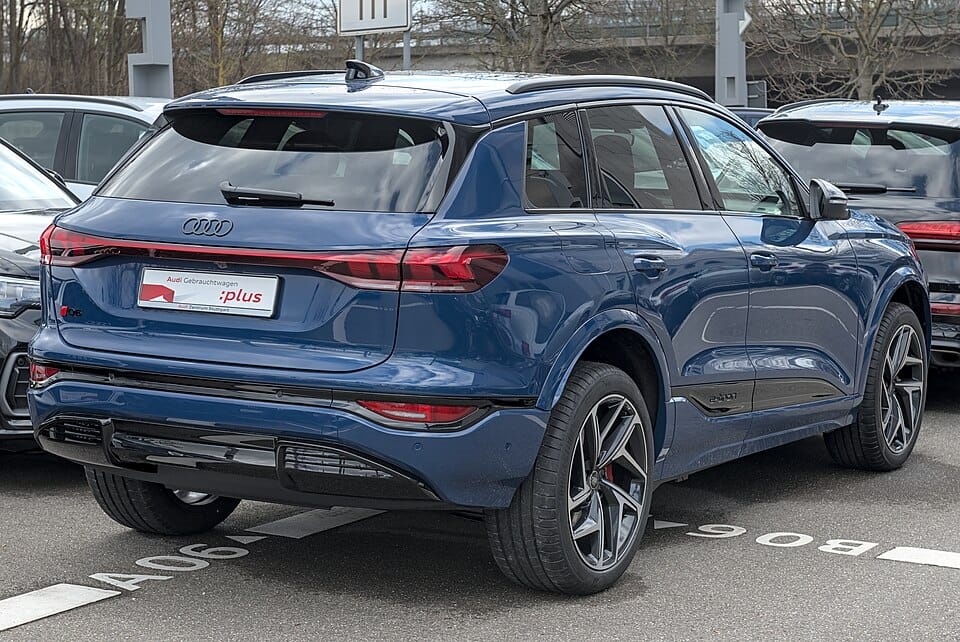
The review. The Q6 is the most important Audi e-tron yet — the first on the 800-volt PPE platform it shares with Porsche’s Macan Electric, and it fixes nearly every complaint about older e-trons. The rear-drive model makes 322 hp and goes an EPA-rated 321 miles; the quattro brings 456 hp, 307 miles, and a 4.9-second 0–60; the SQ6 turns the dial further. The headline is charging: the 94.4 kWh (net) pack accepts roughly 270 kW, taking 10–80% in about 21 minutes — Tesla-class speed with Audi’s typically honest, flat charging curve.
The interior moves to Audi’s newest digital cockpit, and the ride/refinement balance is the best in the lineup. This is the e-tron to cross-shop against a new Model Y or BMW iX3 — and in cabin quality, it beats both.
New vs used. Here the used math collapses. The Q6 only reached U.S. customers in 2025, so the “used” inventory is a trickle of low-mile 2025s selling at modest discounts — the steep part of the depreciation curve hasn’t happened yet, because there’s no older generation to drag values down and supply is scarce. Paying ~90% of new for a year-old example with a year of warranty gone is poor value. If the Q6 is the car you want, order the 2026 — and if the budget says otherwise, a used Q8 e-tron (below) delivers more space for half the money.
Audi Q8 e-tron (and the Original e-tron): The Used-Only Flagship Bargain
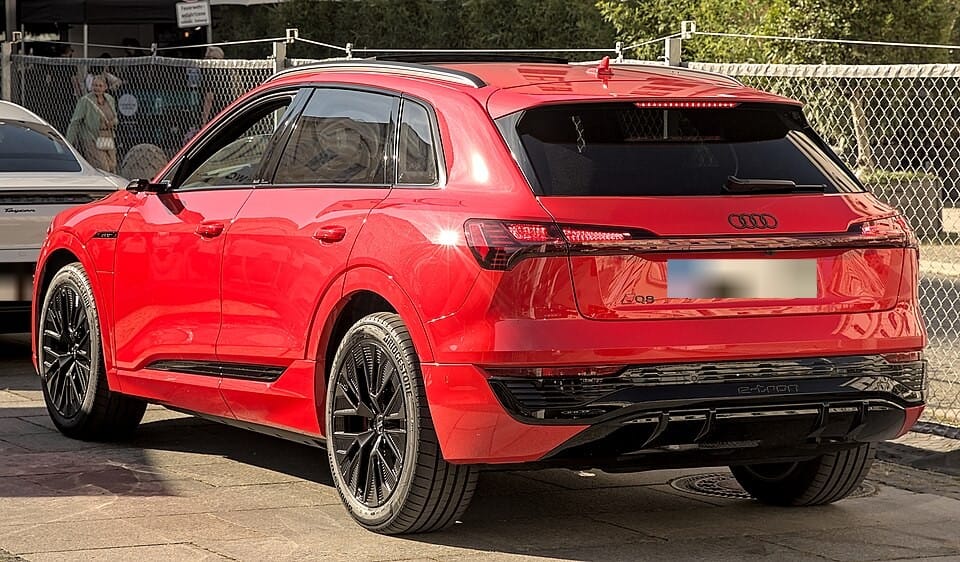
The review. This is the SUV that launched the Audi e-tron badge in 2019 as simply the “e-tron,” gained a bigger battery and the Q8 e-tron name for 2024, and ended production in early 2025 when Audi closed its Brussels plant. Don’t let the discontinuation scare you — let it pay you.
The Q8 e-tron is a genuinely lovely thing: a full-size, air-suspended luxury SUV with one of the quietest cabins in the EV world, real towing ability (4,000 lbs), and Audi’s famously honest charging behavior — its 170 kW peak is unremarkable on paper, but it holds near-peak speed deep into the charge, so real-world stops are quicker than the spec suggests.
The 2024 Q8 e-tron’s 114 kWh pack delivers around 285 miles; the 2019–2022 original managed a more modest 204–222. The driving experience is classic big Audi: heavy, hushed, planted, indifferent to weather.
New vs used. There is no new. What’s left is one of the steepest depreciation curves in the entire car market: 2023–24 Q8 e-trons that stickered at $74,400+ now list from around $30,000, with the nationwide average near $44,000 and clean Premium Plus cars averaging ~$41,000. That’s a 40–55% discount on a 1–3-year-old flagship — the “half-price luxury” play from my used EV guide in its purest form.
The earlier 2019–22 e-trons have fallen under $25,000, but their shorter range and age push them past this guide’s 1–3-year sweet spot. Two pragmatic notes: parts and service continue (Audi dealers service discontinued models for many years, and the battery warranty runs 8 years/100,000 miles from first sale), but resale will keep sliding — buy a Q8 e-tron to keep it, not to flip it.
Audi e-tron GT: The Greatest Used Performance Bargain in EVs
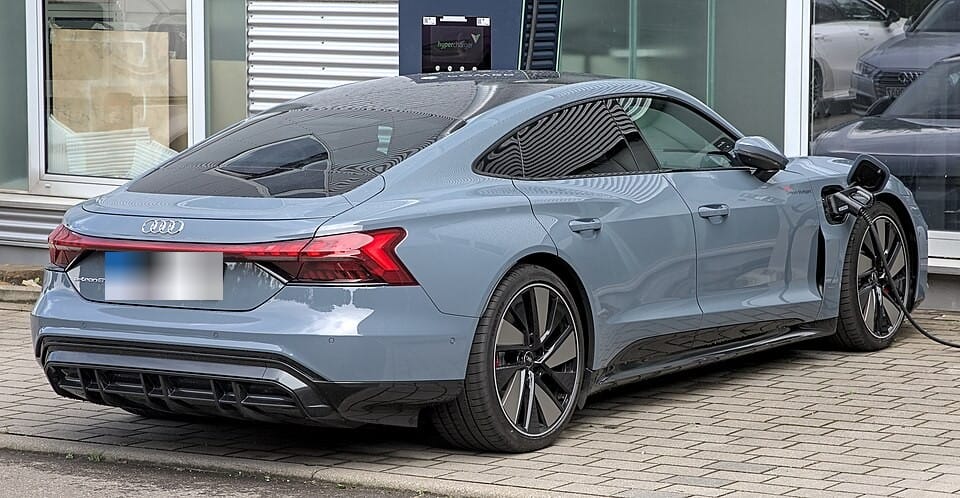
The review. The Audi e-tron GT is the Porsche Taycan’s twin under Audi couture — same J1 platform, same 800-volt bones, arguably the better-looking body. The current car is sensational: the 2026 S e-tron GT makes 670 hp with a 97 kWh (net) battery and roughly 300 miles of range, and the RS e-tron GT Performance is a 912-hp, 2.5-second-to-60 monster. Even the original 2022–23 cars (522–637 hp) deliver the core experience: a low, planted super sedan that charges fast, corners like a Quattro legend, and makes every drive feel like an occasion.
Rear seat and trunk are tight — this is a GT car, not a family hauler — and efficiency trails the sedans from Lucid and Tesla. Nobody buys this car for efficiency.
New vs used. The numbers are almost comical. New: $128,995 for the S, $171,795 for the RS. Used: 2022–23 e-tron GTs routinely list at $40,000–$60,000, with early cars dipping into the high $30s — CarEdge pegs the model’s five-year depreciation at roughly 60%, among the steepest of any performance car.
That means the used buyer gets a six-figure Audi halo car for Camry-Hybrid-money plus change, with the drivetrain’s 8-year battery warranty still running on most examples. The new car’s 2025-onward refresh brought more power and faster charging, and if you must have 912 hp, only new will do. But as a driving experience per dollar, a $50,000 used Audi e-tron GT might be the single best performance-car purchase in the world right now — electric or otherwise.
Frequently Asked Questions
Which Audi e-tron should I buy new versus used?
Buy the Q6 e-tron new (the used market barely exists yet), the Q4 e-tron used (40%+ off a 2-year-old car), the Q8 e-tron used only (it’s discontinued), and the e-tron GT used for the biggest performance bargain.
Why is the used e-tron GT considered such a bargain?
It’s a high-end performance EV that depreciated steeply, so used examples sell for a fraction of their original price while still delivering near-supercar performance — the standout value pick in the lineup.
Is the discontinued Q8 e-tron risky to buy used?
Discontinuation is mostly price leverage, not a red flag — Audi continues parts and service support. It does mean softer resale later, so buy it to keep, not to flip.
Do Audi e-trons work at Tesla Superchargers?
With a NACS-to-CCS adapter, yes — current e-trons use a CCS port and can charge at Superchargers that support adapter access.
New vs Used e-tron: The Decision Framework
The pattern across the Audi e-tron family is simple: Audi’s depreciation is brutal on everything except the car that’s too new to have depreciated. So the framework is — if the model has been on sale 2+ years, the used discount overwhelms what’s new about the new one (Q4, Q8, GT); if the model just launched on genuinely new architecture, buy the architecture (Q6).
Every used e-tron carries Audi’s 4-year/50,000-mile basic warranty for whatever term remains, plus the 8-year/100,000-mile battery warranty, both of which transfer. Audi Certified Pre-Owned adds another year of coverage and a multi-point inspection — worth a modest premium on the Q8 and GT, where out-of-warranty repairs get expensive. And every Audi e-tron here charges on CCS, so factor in one accessory from day one:
Supercharger Adapter for CCS EVs (A2Z Typhoon / Lectron class, NACS-to-CCS)
Every e-tron in this guide has a CCS port; this adapter opens most of the Supercharger network to it. Audi supports Supercharger access — confirm your model on the compatibility list.
Check Price on Amazon →Portable Level 2 EV Charger (NEMA 14-50)
Used Audis frequently arrive without the original charging kit. A 32A portable unit handles home charging from day one and rides along as a road-trip backup.
Check Price on Amazon →Before delivery day, sort the garage out too — my complete home charging setup guide covers the install (note: the 30C federal charger credit expired June 30, 2026), and the cables & adapters guide sorts the CCS/NACS question by brand. If you’re weighing the e-trons against other brands at these prices, start with the full used EV rankings and check which state incentives still apply in 2026.
Our Honest Verdict
The Audi e-tron family is a good example of when to buy new and when to buy used. Buy the Q6 e-tron new, because its 800-volt platform is a real step forward and there is no used market yet. Buy the rest used. That means a Q4 for around $30,000 with years of warranty left, and a Q8 e-tron for around $40,000 that sold as a $75,000 flagship two years ago. The best deal of the group is an e-tron GT for around $50,000, which gets you a six-figure supercar experience for about sixty cents on the dollar. Audi built good EVs, and the first owners paid for most of the depreciation. Buying used is the sensible way to get one.
Related Guides
Sources & further reading: Audi USA — Q6 e-tron specifications · Edmunds — Q4 e-tron pricing · CarEdge — e-tron GT depreciation · KBB — S e-tron GT
As an Amazon Associate I earn from qualifying purchases.