Updated September 5, 2026
Disclosure: As an Amazon Associate, I earn from qualifying purchases. This comes at no extra cost to you and helps keep this site running.
The smartest money in the car market right now is in the best used EVs, the ones that are one to three years old. I buy my own Teslas new, and when I worked through the numbers in my Model 3 vs Accord cost-of-ownership analysis, depreciation in the first few years turned out to be the biggest single cost of owning a new car. That is true of any new car. When you buy one lightly used, the first owner has already paid that cost, and you don’t.
EVs also lose value faster than any other kind of vehicle. Price cuts on new EVs pushed used values down, and so did the end of the federal tax credit in September 2025 and how quickly the technology keeps changing. That is bad news if you bought new, and good news if you are shopping used. This guide sorts the used EV market into four price brackets, with verified June 2026 market prices, what each car gives up compared with a new one, and the battery checks to run before you hand over any money.
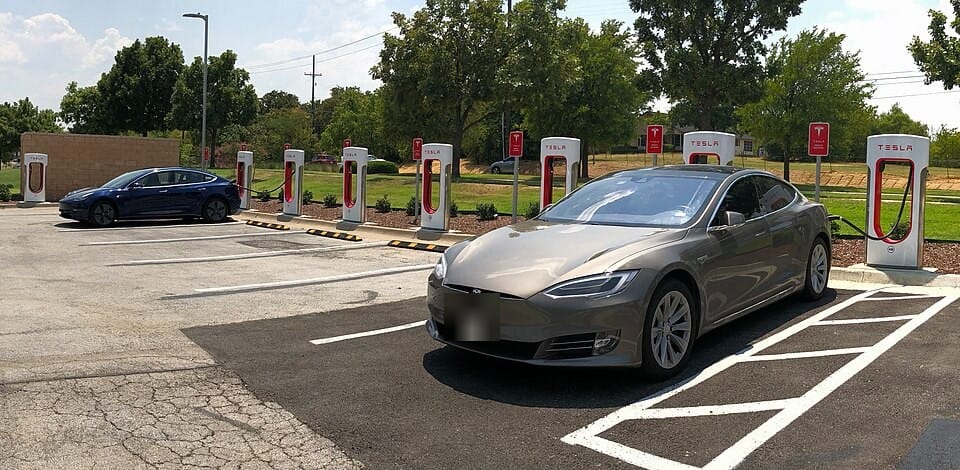
Someone else paid the depreciation on these. That someone doesn’t have to be you.
Why a 1–3-Year-Old Used EV Is the Deal of 2026
Three forces collided to create this market. First, EVs lose value faster than gas cars — the average electric car sheds 40–60% in its first few years, versus roughly 35–40% for comparable gas vehicles. Second, new-EV price cuts (Tesla’s especially) dragged used values down with them. Third, the federal tax credits died on September 30, 2025 — both the $7,500 new-EV credit and the $4,000 used-EV credit — which removed the artificial floor under new prices and pushed even more value-conscious buyers into the used market. The result: the gap between “nearly new” and “new” has never been wider.
One more structural advantage: an EV with 25,000 miles is mechanically much closer to new than a gas car with 25,000 miles. No clutch wear, no carbon buildup, no transmission heat cycles — the electric drivetrain has a handful of moving parts, and regenerative braking means even the brake pads are barely worn. The thing that ages is the battery, and that’s both measurable before you buy and covered by the longest warranty on the car. Used prices below are typical asking ranges from major listing sites (Edmunds, KBB, CarGurus) as of June 2026 — your local market will vary.
$10,000–$20,000: The Short List (and It’s Genuinely Short)
Honesty first: very few 1–3-year-old EVs have fallen this far. This bracket is dominated by one heroic dead model and a couple of commuter specials — but if your driving fits their range, the value here is absurd.
| Vehicle | Typical Used Price | ~% Off Original MSRP | EPA Range (new) |
|---|---|---|---|
| Chevrolet Bolt EV / EUV (2022–23) | $13,000–$21,000 | 35–55% | 247–259 mi |
| Nissan Leaf / Leaf Plus (2023–24) | $12,000–$18,000 | 45–60% | 149–212 mi |
| Mini Cooper SE (2023–24) | $15,000–$20,000 | 40–50% | 114 mi |
The pick: Chevrolet Bolt EUV. GM killed the Bolt at the end of 2023, and the used market punished it for being discontinued rather than for being bad — it’s the same 250-mile, dead-reliable commuter it always was, now averaging around $21,000 for a 2023 EUV with low-mile examples dipping into the teens. The catch: slow DC fast charging (~55 kW) makes it a poor road-tripper. As a daily commuter charged at home, nothing under $20K touches it. The Leaf is cheaper still, but its CHAdeMO fast-charge port is obsolete and its air-cooled battery ages faster in hot climates — fine as a second car, but check battery health extra carefully. The Mini is a go-kart with a 114-mile leash: a brilliant city car, an honest second car, nothing more.
$20,000–$30,000: The Sweet Spot of the Entire Used EV Market
This is where I’d send most readers. Every car in this bracket was a $40,000–$55,000 vehicle two or three years ago, and every one of them has 220+ miles of range and modern fast charging.
| Vehicle | Typical Used Price | ~% Off Original MSRP | EPA Range (new) |
|---|---|---|---|
| Tesla Model 3 (2023–24 RWD) | $23,000–$28,000 | 35–45% | 272 mi |
| Hyundai Ioniq 6 (2023–24) | $22,000–$27,000 | 40–50% | 240–361 mi |
| Hyundai Ioniq 5 (2023–24) | $24,000–$29,000 | 40–50% | 220–303 mi |
| Kia EV6 / VW ID.4 (2023–24) | $23,000–$29,000 | 40–50% | 206–310 mi |
The pick: Tesla Model 3. Bias disclosed — I own Teslas — but the case is structural: native access to the Supercharger network, over-the-air updates that keep improving the car, the best resale floor of any used EV (iSeeCars rates it the best value-retainer Tesla makes), and parts/knowledge everywhere. A 2023 RWD in the mid-$20s is the single best used-car value I can name, and I’ve made the full case in my used Model 3 guide. The counterargument is real, though: the Hyundai/Kia trio fast-charges quicker (800V architecture), rides quieter, and carries a 10-year/100,000-mile battery warranty that transfers — the longest in the bracket. The Edmunds-tracked average for a used Ioniq 5 is about $26,100, and the sleeker Ioniq 6 sedan averages even less at ~$24,900 — sedans are unfashionable, which makes them underpriced. The ID.4 is the value floor of the group: low-$20s for a roomy family crossover, with a clunkier infotainment as the tax you pay.
$30,000–$40,000: Nearly-New Family Haulers and Entry Luxury
| Vehicle | Typical Used Price | ~% Off Original MSRP | EPA Range (new) |
|---|---|---|---|
| Tesla Model Y (2023–24) | $30,000–$35,000 | 30–40% | 279–330 mi |
| BMW i4 (2023–24) | $33,000–$40,000 | 35–45% | 270–301 mi |
| Audi Q4 e-tron (2023–24) | $28,000–$36,000 | 40–50% | 236–265 mi |
| Mercedes EQB (2023–24) | $28,000–$36,000 | 40–50% | 205–250 mi |
The pick: Tesla Model Y. A 2023 Model Y averages roughly $32,000 on the major listing sites right now — for what was a $50,000+ car and remains the default family EV: most cargo space, best charging network, best software. If you want the full ownership picture, my Model Y accessories guide covers what owners actually add. The German trio is the interesting alternative: this is where the luxury-badge discount starts. A BMW i4 — genuinely one of the best-driving EVs made — shows up in the mid-$30s after losing a third or more of its sticker. The Q4 e-tron and EQB depreciate even harder (their resale is the worst in this bracket, which is precisely your opportunity), turning $55,000 luxury crossovers into $30,000 used buys. Buy the German cars for the cabin and the drive — but understand exactly what the charging trade is. At home it’s a non-issue: all four charge overnight on the same Level 2 setup. The gap shows up on road trips. The EQB peaks at roughly 100 kW of DC fast charging (about 32 minutes from 10–80%), the Q4 e-tron at 135–175 kW depending on model year, and the i4 is the German exception at up to ~205 kW — still shy of the Model Y’s 250 kW peak and, more importantly, of the Supercharger network, which remains larger and more reliable than the CCS networks these cars natively depend on. An adapter narrows the network gap considerably (more on that below). The honest summary: if you road-trip monthly, the Tesla wastes less of your life at chargers; if you road-trip twice a year, the German cabins are worth the wait.
Over $40,000: Half-Price Luxury — the Depreciation Jackpot
Here’s the open secret of the used EV market: nothing on earth depreciates like a six-figure luxury EV. Industry analyses peg luxury EV sedans and SUVs at 40–60% value loss within a few years — early Mercedes EQS and Audi e-tron examples have shed as much as 70%. The first owners paid for the badge and the novelty; the second owner gets the engineering.
| Vehicle | Typical Used Price | ~% Off Original MSRP | Original MSRP (typical) |
|---|---|---|---|
| Mercedes EQE Sedan (2023–24) | $38,000–$48,000 | 45–55% | $76,000–$90,000 |
| BMW iX (2023–24) | $45,000–$58,000 | 40–50% | $87,000–$110,000 |
| Porsche Taycan (2022–24) | $55,000–$70,000 | 40–50% | $92,000–$130,000+ |
| Rivian R1T / R1S (2023–24) | $45,000–$60,000 | 30–40% | $73,000–$90,000 |
The pick depends on who you are. The Mercedes EQE is the headline: an S-Class-adjacent electric sedan for the price of a new Camry XSE Hybrid plus change — the single most car-per-dollar in this guide. The BMW iX got dismissed for its looks and rewarded used buyers with a $100K SUV at half off. The Taycan is the enthusiast play — it holds value better than the German sedans precisely because it’s genuinely great, but even Porsche can’t fight EV depreciation entirely. And the Rivian is the outlier that proves the rule: trucks and genuine desirability resist depreciation (iSeeCars puts the R1T at about 45.5% retained after five years — strong for an EV — while the R1S SUV retains only about 32.3%), so the truck’s discount is smaller — buy it because you want it, not because it’s the bargain. One caution for the whole bracket: luxury EV out-of-warranty repairs are priced like luxury repairs. Buy these 1–3 years old precisely so the factory warranty is still doing the worrying.
How to Check Battery Health Before You Buy a Used EV
The battery is the car. Modern packs are aging far better than the early skeptics predicted — roughly 2% capacity loss per year is typical, and liquid-cooled packs from 2022 onward are the best yet — but you should still verify, not trust. Here’s what actually works, because the honest answer is that no single tool covers every brand:
- 📊Get a Recurrent battery report (any brand)Recurrent is the AAA-recommended independent service for used EV battery health — many dealers already provide its reports free, and you can request one on any listing. If a seller won’t support a battery report, walk.
- 🔋The 100% charge test (any brand)Ask the seller to charge to 100% and photograph the displayed range. Compare it to the car’s original EPA rating. A 2023 car showing 90–95% of its original range is normal; below ~85% deserves an explanation and a price adjustment.
- 🚗Tesla: run the built-in Battery Health TestTeslas display battery health in the vehicle software (Service menu), and the full test compares current energy retention to factory-new. It needs the battery below ~20%, an AC charger connected, and up to 24 hours — so ask the seller to run it before your visit, or request the result from a Tesla Service Center check.
- 🔌OBD scanner + app (brand-specific only)A $30–60 Bluetooth OBD-II adapter paired with the right app reads true pack state-of-health on many brands — LeafSpy for the Nissan Leaf is the gold standard, and Car Scanner profiles cover Hyundai, Kia, VW, and BMW. Know this tool’s limit: Teslas don’t have a standard OBD port, so this method does not apply to them without specialized adapters.
- 🧾History still mattersCarfax for accidents, service records for battery-related visits, and ask how it was charged — a car that lived on DC fast charging aged faster than one charged overnight at home.
New to EVs entirely? Before you shop the used market, read our honest breakdown of switching from gas to electric—cost, range, charging, and the questions that decide whether an EV fits your life.
Frequently Asked Questions
Why is a 1–3-year-old used EV such a good deal in 2026?
The first owner already absorbed 30–60% depreciation, while the car still has years of battery and drivetrain warranty left — so you get a nearly-new EV for close to half the original sticker.
How do I check a used EV’s battery health before buying?
Compare the current full-charge range estimate against the original EPA rating, ask for a battery-health readout, and review any battery-related service history. The guide walks through the exact steps.
Does a used EV still have battery warranty?
Usually yes — most EV battery warranties run 8 years/100,000 miles and transfer to later owners, so a 1–3-year-old car typically has 5+ years remaining.
What should I buy right after a used EV?
A NACS-to-CCS Supercharger adapter (for non-Tesla EVs) and a portable Level 2 charger — the two cheapest upgrades that make daily charging easy.
Your First Two Purchases After the Car
Two purchases make used-EV ownership dramatically easier from day one:
Supercharger Adapter for CCS EVs (A2Z Typhoon / Lectron class, NACS-to-CCS)
If your used EV has a CCS port — and nearly every 2023–24 non-Tesla does — this adapter opens most of the Supercharger network to it. Confirm your model is on the maker’s compatibility list, then road-trip like a Tesla.
Check Price on Amazon →Portable Level 2 EV Charger (NEMA 14-50)
Most used EVs don’t come with a charging cord. A 32A portable unit covers home charging from day one and doubles as a road-trip backup — works with every car in this guide.
Check Price on Amazon →And before delivery day, sort out your charging: my complete home EV charging setup guide walks through the whole install — including what to do now that the federal 30C charger credit has expired (June 30, 2026). If you’re cross-shopping new instead, start with the best new EVs under $40,000, and check what state incentives still exist in 2026 — some apply to used EVs too.
Our Honest Verdict
Buying a one to three year old EV in 2026 means the first owner took the depreciation hit and you get the car for a lot less. Under $20K, the Bolt EUV is the clear value pick. Between $20K and $30K, a 2023 or 2024 Model 3 or an Ioniq 5 or 6 gets you a nearly new car for about half the original sticker. From $30K to $40K, the Model Y is the default family choice and the German entries are the ones you buy for the styling. Above $40K, depreciation gets you a Mercedes or BMW at roughly half price with years of factory warranty left. Before you buy any of them, verify the battery health, confirm the warranty transfers to you, and budget for the right charging adapter.
Related Guides
Sources & further reading: Recurrent — used EV battery reports · Edmunds — used EV deals · Kelley Blue Book — used EV values · iSeeCars — luxury EV resale data
Eyeing one of the German bargains specifically? I went deeper on the whole Audi lineup — every model, with a new-vs-used verdict for each — in my Audi e-tron new vs used guide.
As an Amazon Associate I earn from qualifying purchases.