Updated September 5, 2026
Nearly every EV shopper in 2026 ends up weighing the Tesla Model Y vs Mustang Mach-E, so this guide puts the two side by side. They are priced close to each other and are roughly the same size. Both have the room a family needs. Where they differ is software, charging, and how they drive, and those differences matter more than the spec sheet suggests.
I am a longtime Tesla owner and I have driven both cars. Below I go through where each one leads and where the gaps are smaller than the internet makes them sound, and at the end I say which buyer should pick which.
Price & Trims
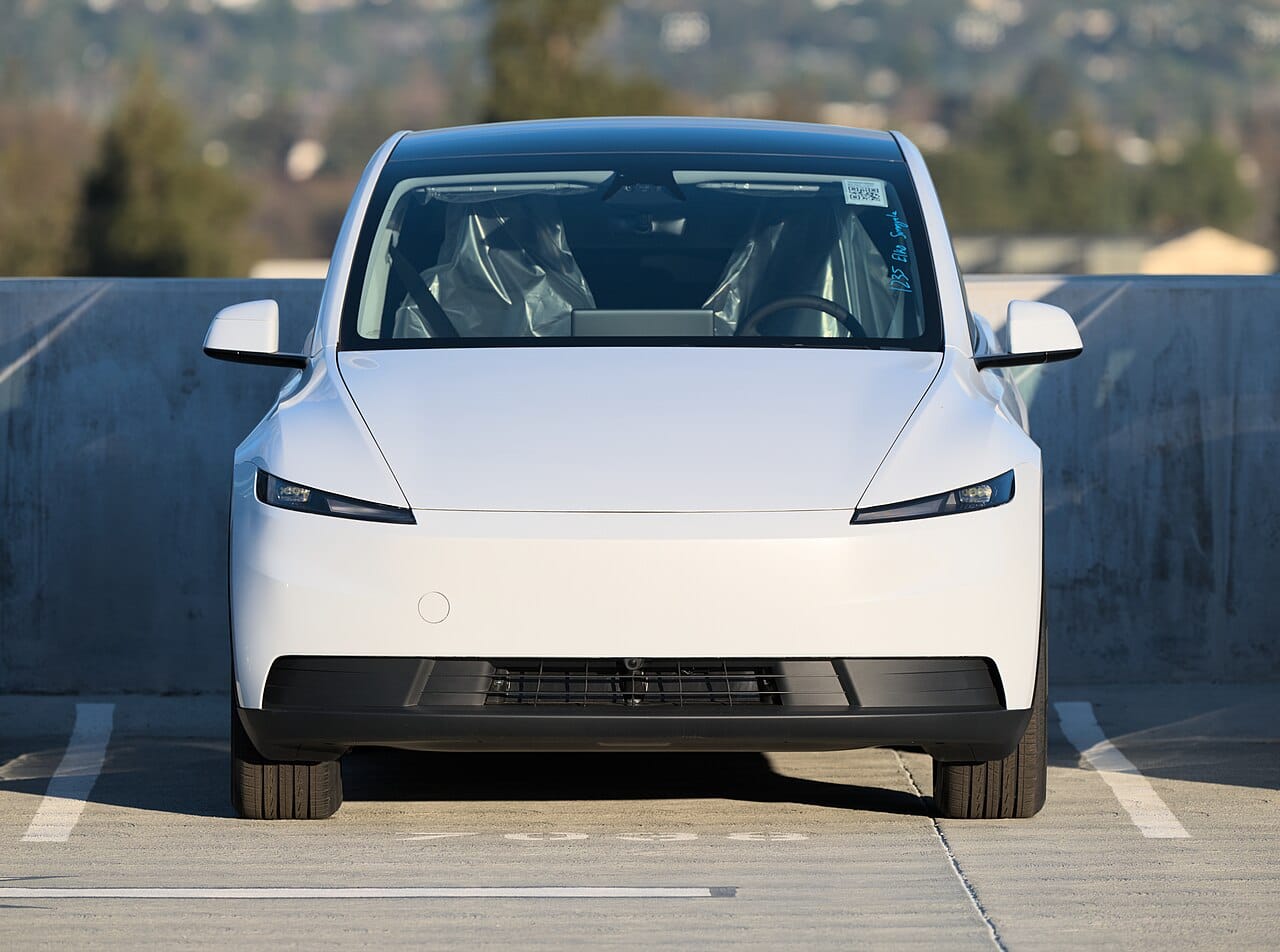
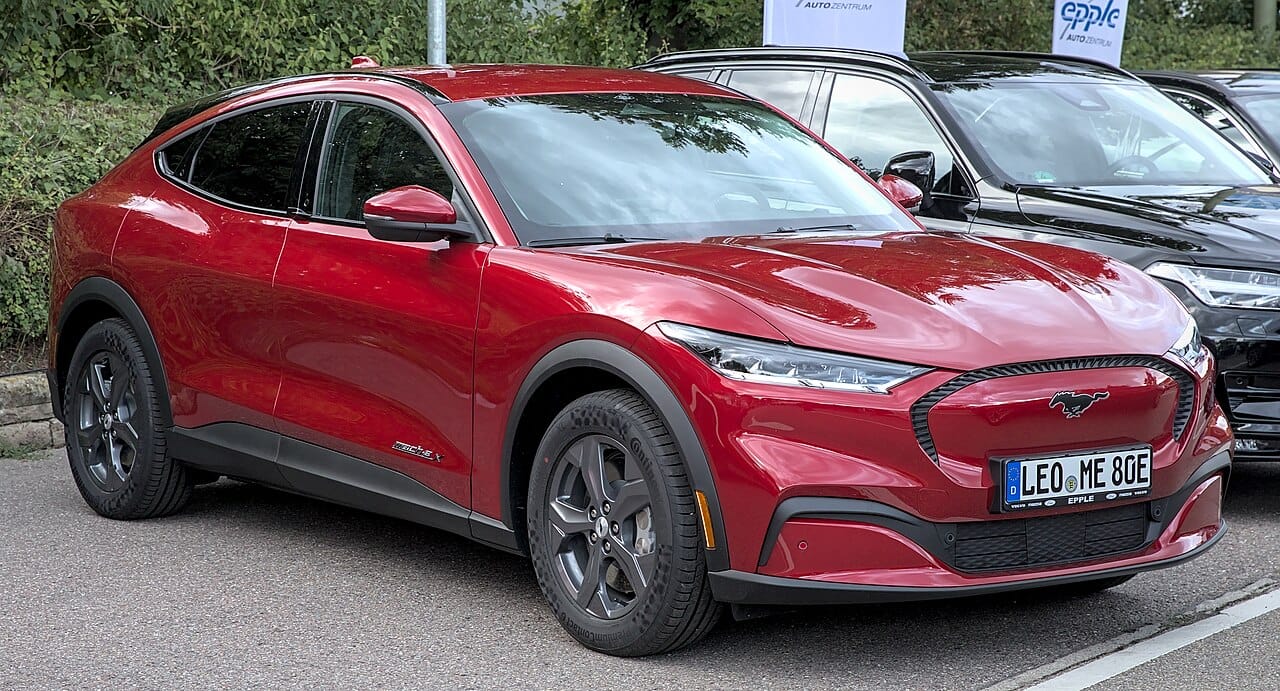
The Mach-E undercuts the Model Y at the entry point. The Mustang Mach-E Select RWD starts at $39,840, with the range topping out at the AWD Rally trim around $59,735. Ford keeps it simple with four trims: Select, Premium, GT, and Rally. The Tesla Model Y Standard RWD starts at $41,630, climbing to the Performance AWD at $59,630, across five trims (Standard RWD, Standard AWD, Premium RWD, Premium AWD, Performance AWD). Note: the $7,500 federal EV tax credit ended September 30, 2025, so these are unsubsidized prices for both.
Range & Efficiency: Tesla’s Clear Win
This is where the Model Y pulls ahead. Tesla quotes a maximum EPA-estimated range of up to 357 miles versus the Mach-E’s 320 miles, and the Model Y is meaningfully more efficient — roughly 144 MPGe city / 123 MPGe highway (134 MPGe combined). In real-world terms that means fewer charging stops on road trips and lower cost per mile at home. Tesla’s efficiency advantage has been consistent for years, and it still holds in 2026.
Charging: The Supercharger Advantage
For many buyers, this is the deciding factor. The Model Y plugs natively into Tesla’s Supercharger network — still the most reliable, widely available fast-charging network in North America, with seamless plug-and-charge billing. The Mach-E can now access Superchargers with a NACS adapter, which narrows the gap, but the Tesla experience remains more polished. If you take regular road trips, the Model Y’s charging experience is hard to beat. To get the most from either at home, pair it with a quality Level 2 home charger.
Interior & Tech: Two Philosophies
Here the Mach-E scores real points with traditionalists. Ford keeps a dedicated digital instrument display in front of the driver and supports wireless Apple CarPlay and Android Auto — two things Tesla still refuses to offer. If you want your speed in your line of sight and your phone mirrored on the screen, the Mach-E feels more familiar.
Tesla goes all-in on its own ecosystem: a large center touchscreen (plus a rear screen on current Model Y variants), no instrument cluster, and the best-in-class over-the-air update system that genuinely improves the car over time. Tesla’s software, navigation, and voice controls are more refined; Ford’s layout is more conventional. Neither is wrong — it comes down to whether you want cutting-edge or familiar.
Safety & Warranty
The 2026 Mustang Mach-E is an IIHS Top Safety Pick, and Ford backs it with a 3-year/36,000-mile bumper-to-bumper warranty plus 8-year/100,000-mile battery coverage. Tesla provides a 4-year/50,000-mile basic warranty with battery and drive-unit coverage that varies by Model Y configuration (typically 8 years). Both are strong, modern, well-built EVs; Ford’s longer instinctive “safety pick” badge and Tesla’s longer basic-warranty term roughly cancel out.
Tesla Model Y vs Mustang Mach-E: Head-to-Head (2026)
| Spec | Tesla Model Y | Ford Mustang Mach-E |
|---|---|---|
| Starting price | $41,630 | $39,840 |
| Top trim price | $59,630 (Performance) | $59,735 (Rally) |
| Max EPA range | up to 357 mi | up to 320 mi |
| Efficiency | ~144/123 MPGe (134 comb.) | Lower |
| Fast charging | Native Supercharger | Supercharger via adapter |
| Driver display | None (center screen) | Yes (digital cluster) |
| CarPlay / Android Auto | No | Yes (wireless) |
| OTA updates | Best-in-class | Yes (more limited) |
| Safety | Strong | IIHS Top Safety Pick |
| Basic warranty | 4 yr / 50,000 mi | 3 yr / 36,000 mi |
📋 Still on the fence? Get the free EV Switch Decision Worksheet.
A one-page checklist that runs your real numbers—home charging, mileage, cost-to-own, winter range—for a clear yes/no for your life. No spam, unsubscribe anytime.
Model Y vs Mustang Mach-E: Which One Should You Buy?
Choose the Tesla Model Y if you take road trips, want the longest range and best efficiency, value the Supercharger network, and like living on the software frontier. It remains the benchmark electric SUV, and its resale values are the strongest in the segment. If you’re weighing it against accessories and ownership costs, see our Model Y accessories guide and our EV cost-of-ownership breakdown.
Choose the Ford Mustang Mach-E if you want a lower entry price, a traditional driver display, wireless CarPlay/Android Auto, an IIHS Top Safety Pick, and a more conventional cabin from a legacy automaker. It’s a genuinely good EV that does the everyday-SUV job beautifully — and for buyers who don’t road-trip constantly, the range gap won’t matter.
Our Honest Verdict
The Tesla Model Y is still the benchmark in this class in 2026. It has more range, better efficiency, a better charging network, and stronger resale. The Mustang Mach-E has closed much of the gap, and its lower starting price, CarPlay support, driver display, and Top Safety Pick rating make it the better pick if you care more about familiarity and price than about road-trip range. Either one is a good car. Pick the one whose strengths match the driving you do.