
Updated September 1, 2026
Disclosure: As an Amazon Associate, I earn from qualifying purchases. This comes at no extra cost to you and helps keep this site running.
The panel under the rear of your Model 3, what everyone calls the Tesla Model 3 skid plate, isn’t a metal plate at all. It’s a soft fiberboard-and-plastic cover that Tesla uses to smooth airflow and save weight and cost. That works fine for aerodynamics, but it doesn’t hold up to puddles and road debris, which is why yours keeps tearing.
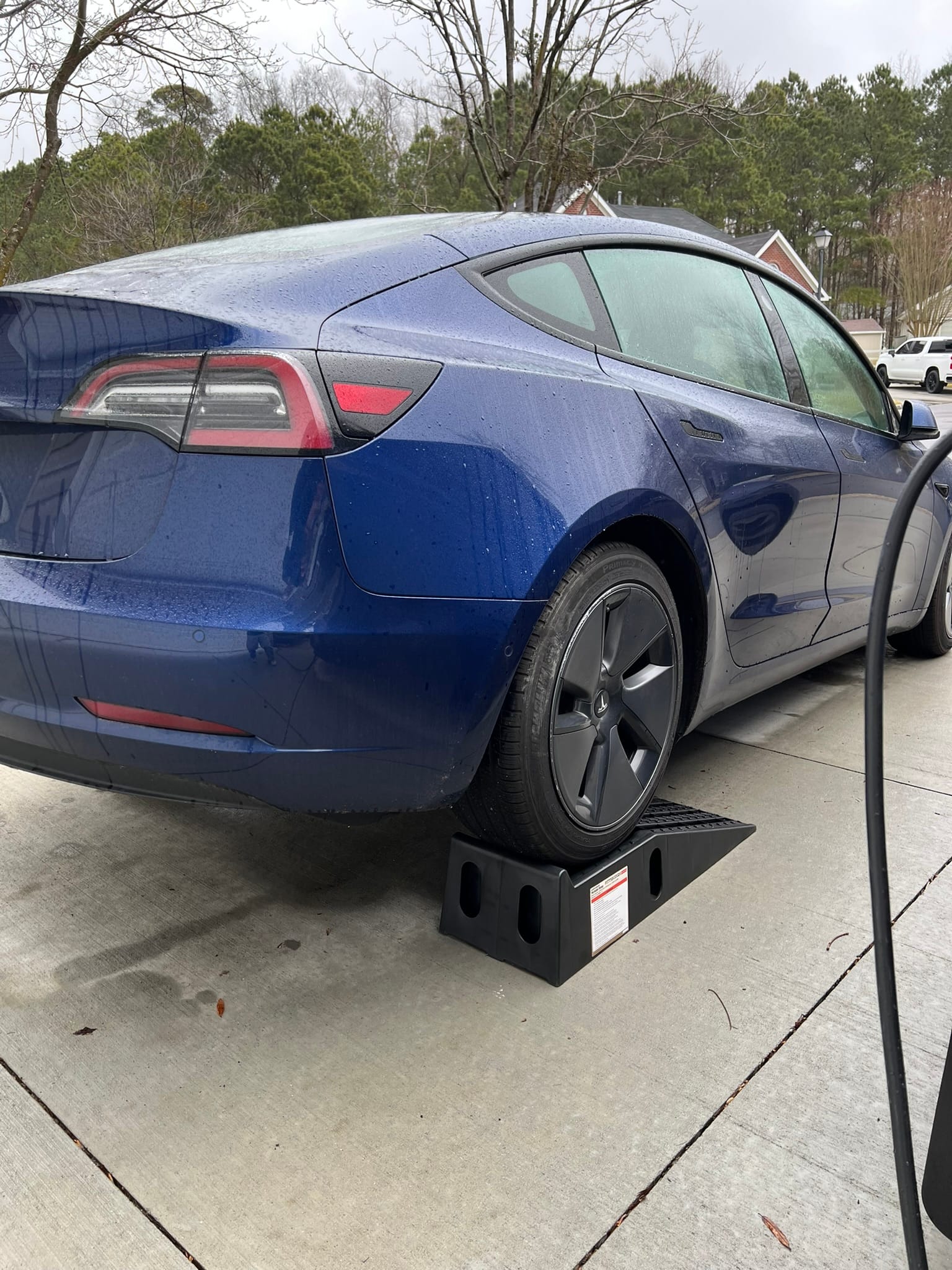
Why your Model 3 underbody panel keeps tearing
The most common way it goes is water. Hit a standing puddle or a flooded dip at speed and the water doesn’t part cleanly — it slams into the flat underside and shoves the panel down and back. The fasteners tear through the soft material, a corner drops, and now you’ve got a flap of cover dragging on the pavement making an awful scraping sound. This is common enough that Tesla itself has acknowledged a related water-damage design flaw — Model 3 rear bumper covers coming loose after driving through standing water — and the owner forums tell the same story about the underbody panel specifically. Steep driveways, parking curbs, and road debris finish off the ones the puddles don’t.
That’s exactly what happened to me. I didn’t even catch it in the moment — I’d been driving in the rain, and it wasn’t until after the rain stopped that I started hearing a scraping noise from underneath. I pulled over, looked beneath the car, and there it was: the rear cover bent and partially torn loose, hanging down and dragging on the ground. A quick search confirmed what a lot of owners already know — this happens all the time with rainy driving and puddles. After that, I stopped waiting for the other panels to fail and replaced them proactively with aluminum.
The good news: the fix is genuinely easy, it’s cheap relative to a body-shop trip, and it’s permanent. An aluminum plate can’t soak up water, won’t tear at the fastener holes, and shrugs off the debris that shreds the stock cover.
What to look for in a replacement Model 3 skid plate
Not all aftermarket plates are equal. After buying more than one, here’s what actually matters:
- Material and thickness. You want real aluminum, ideally around 2.5mm. Some budget “aluminum” plates are actually painted steel — it works, but it can rust at any bent corner and it’s heavier. Read the reviews, not just the title.
- Foam sound-lining. The stock panel has a bit of acoustic damping. A bare metal plate with no foam will transmit more road noise and low rumble into the cabin. The better plates include a soundproofing layer; the cheap ones skip it.
- One-piece vs two-piece. A single-piece plate is stiffer and simpler to install than one you bolt together.
- Factory-hole fitment. The whole appeal is that it reuses Tesla’s existing mounting points and screws. Confirm the listing says “factory holes / original screws” so you’re not drilling.
- Fitment year. Model 3 spans 2017–2026 (including the Highland refresh) and shares plates with the Model Y (2020–2026). Match your year.
How to replace a Tesla Model 3 skid plate (step by step)
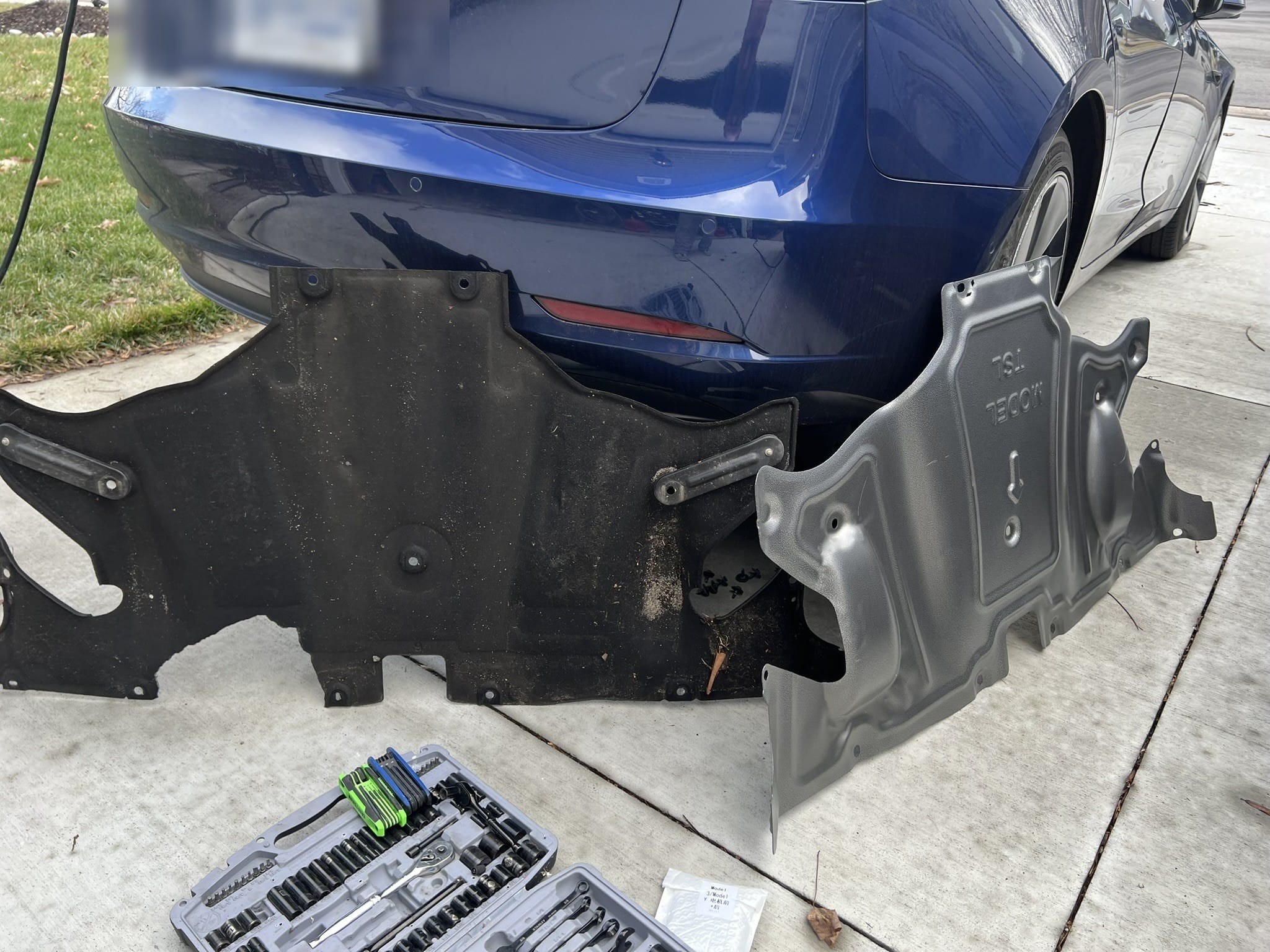
This is a driveway job. You do not need a lift or a jack — drive-up ramps are safer and faster for this. What you need: a pair of car ramps, a socket/ratchet set (the fasteners are common metric sizes), and about 30 minutes. A second set of hands helps for holding the plate up to the first bolts, but isn’t required.
1. Drive up onto the ramps. Position the ramps at the rear wheels — the rear panel over the motor is the one that tears — and drive (or reverse) up onto them slowly and evenly so the back of the car lifts. Shift to Park and set the parking brake. Chock the front wheels still on the ground.
2. Locate the fasteners. The rear underbody panel is held by a perimeter of bolts and a few push-clips. Get under, and you’ll see the outline of the panel and every fastener around its edge.
3. Remove the old panel. Back out the bolts (keep them — you’ll reuse them), release any clips, and support the panel as the last bolts come out so it doesn’t drop on your face. The stock one is light. Set it aside — it’s worth keeping as a template.
4. Test-fit the new plate. Hold the aluminum plate up and line up the mounting holes before threading anything. One heads-up: mine arrived bent from shipping — that’s common with these plates — but it was a non-issue. I just bent the corner back straight by hand and it fit easily. Check yours before you’re on your back under the car and straighten any tweaked edge first.
5. Start every bolt by hand. Thread the two center or main bolts first to hold the plate, then work outward. Starting them all by hand before tightening keeps the holes aligned. A dab of threadlocker on each is cheap insurance against rattles.
6. Snug everything down and back off the ramps. Tighten in a crisscross pattern, double-check nothing’s loose, then reverse slowly off the ramps. Done.
The best Model 3 skid plates (what I’d actually buy)
runfider Aluminum Rear Skid Plate — the budget option (what I installed)
This is the one I actually put on my car, and I’ll be straight about it because that’s the whole point of this site. It’s the cheapest real replacement out there, it’s a single piece, and it bolts up to the factory holes. If your stock panel is already torn and you just need it covered for as little money as possible, it does the job.
The honest caveats, echoed across the reviews and worth knowing before you buy: it often arrives bent from thin packaging (you bend the corner back — mildly annoying, not a dealbreaker), the “aluminum” claim is disputed — several buyers are convinced it’s painted steel that can rust at a bent corner — and there’s no foam lining, so expect a little more road noise than stock. It’s a budget part and it feels like one. It’s held up fine on mine, but if I were buying again I’d spend the extra and get the EZREXPM below.
runfider Aluminum Rear Skid Plate — Model 3 2017–2024 / Model Y 2020–2024
Check Price on AmazonWhat I ran — cheapest real option, but no foam lining and it often ships with a bent corner you’ll straighten.
EZREXPM Aluminum Rear Skid Plate — my pick, the one to actually buy
If you’re replacing a torn panel, spend the extra and buy this instead. It’s the premium pick of the pair versus the budget plate, but it’s the one I’d hand a friend. It’s genuine 2.5mm aluminum, it’s Amazon’s Choice in the category, and critically it comes with a foam soundproofing lining — so you’re not trading your torn stock panel for a drummy, noisy cabin. Fitment runs the full Model 3 2017–2026 and Model Y 2020–2026, so it covers the Highland cars too.
Reviewers consistently call it solid and “how it should’ve come from the factory.” The two things to know: like most of these it can arrive with a corner tweaked in shipping (bends back easily), and a couple of owners note the foam gasket is glued rather than bonded perfectly — minor. This is the honest best-value pick.
EZREXPM Aluminum Rear Skid Plate — Model 3 2017–2026 / Model Y 2020–2026
Check Price on AmazonWant to armor the front too? EZREXPM makes a matching front skid plate — same 2.5mm aluminum with foam lining, comes with hardware.
Amazon Basics Car Ramps (2-Pack) — how you install it in the driveway
You need to get under the car, and for a job this quick, drive-up ramps beat a jack for both speed and safety. This is the set I used — the Amazon Basics 2-pack, rated 3,250 lb per ramp with a textured non-slip surface. They store in a corner of the garage and they’re the single tool that makes this a 30-minute driveway job instead of a hassle. Tip: on smooth garage concrete, lay a strip of non-slip mat under each ramp so they don’t skate forward as you drive up.
Prefer overlanding-grade protection? Specialty brands like Tesloid, RPM Tesla, and T Sportline sell thicker hydroformed plates with heavier sound-damping (usually direct from their sites). They’re overkill for most drivers, but worth knowing about if you take your car off pavement.
Comparison: which Model 3 skid plate to buy
| Option | Price Tier | Material | Foam lining | Best for | My call |
|---|---|---|---|---|---|
| EZREXPM Rear | Mid-range | 2.5mm aluminum | Yes | Most people | Buy this — quiet, solid, fits through 2026 |
| runfider Rear | Budget | “Aluminum” (disputed) | No | Tightest budget | Works, but you feel the price |
| Amazon Basics Ramps | Budget | Reinforced plastic | — | Doing the install | The tool that makes it a driveway job |
| Premium (Tesloid / RPM / T Sportline) | Premium | Thick hydroformed | Usually | Off-road / overlanding | Overkill for most; non-Amazon |
Frequently Asked Questions
Why does my Tesla Model 3 underbody panel keep tearing off?
Because the factory rear panel is a soft fiberboard-and-plastic cover, not a metal skid plate. It’s built for airflow and low weight, not impact. Driving through standing water at speed is the most common cause — the water forces the panel down until the fasteners tear through the soft material. Steep driveways, curbs, and road debris do the rest. Tesla has acknowledged a related water-damage flaw on the Model 3 (rear bumper covers coming loose in standing water), and owner reports extend the same failure mode to the underbody panel.
Do I need a skid plate on a Tesla Model 3?
You don’t need one to drive, but replacing the flimsy stock panel with an aluminum one is one of the better-value protective upgrades on the car. It stops the repeat tearing, shields the rear motor and battery area from debris, and it’s a permanent fix rather than a pricey dealer replacement of the same failure-prone plastic part.
Is it hard to install a Model 3 skid plate yourself?
No — it’s one of the easier DIY jobs on the car. It’s a direct one-to-one swap using the factory mounting holes and original screws, so there’s no cutting or drilling. With a pair of drive-up ramps and a socket set it takes about 30 minutes. The only fiddly part is holding the plate up to start the first couple of bolts.
Are cheap aluminum skid plates actually aluminum?
Sometimes not. Several budget plates advertised as aluminum are, by many buyers’ accounts, painted steel — which still protects the underbody but is heavier and can rust at any corner that gets bent or scratched. If that matters to you, buy a plate that specifies its thickness (e.g., 2.5mm aluminum) and has reviews confirming the material.
Front skid plate or rear — which do I need?
The panel that most often tears in a puddle is the rear one, over the rear motor. If that’s what dragged, replace the rear. If you want to armor the whole underside — or you scrape on driveways and speed bumps up front — both brands make a matching front plate you can add.
Our Honest Verdict
If your Tesla Model 3 skid plate tore off in a puddle, it wasn’t a fluke. The stock panel is a soft cover that fails that way all the time, and the permanent fix is an easy job in the driveway. Get a pair of ramps and a socket set and bolt an aluminum plate onto the factory holes. For the plate itself, my recommendation is the EZREXPM aluminum rear. It’s real 2.5mm aluminum, it’s foam-lined so your cabin stays quiet, and it fits Model 3 and Model Y through 2026. The runfider budget plate is the one I ran and it works, but with the disputed material, the missing foam, and the shipping dents, it’s the spend-as-little-as-possible option and not the one I’d choose again.